for chemistry paper 5 perhaps? :3S here u go
-
Prepare by Xtremepapers!
🚀 NEW from the xtremepape.rs team: AI exam prep — 150,000+ worked solutions, and it marks your handwritten working from a photo. Sign in with your forum account & try it free → prepare.xtremepape.rs
You are using an out of date browser. It may not display this or other websites correctly.
You should upgrade or use an alternative browser.
You should upgrade or use an alternative browser.
*Biology Paper 5 tips*
- Thread starter knowitall10
- Start date
- Messages
- 20
- Reaction score
- 26
- Points
- 13
when to use n1+n2-2 ??
When he asks for the degrees of freedom of the "t" test
- Messages
- 20
- Reaction score
- 26
- Points
- 13
Guys I need help please. In june 2009 (P5) 3 biii, I didn't get it.. How were we able to knw tht there is no overlap?

- Messages
- 460
- Reaction score
- 6,071
- Points
- 503
When he asks for the degrees of freedom of the "t" test

- Messages
- 10
- Reaction score
- 13
- Points
- 3
thankyou s
thankyou soooo muchAssalamu 'Alaykum Everyone!
A brother, dornam , had asked for tips and advice on preparing for the Biology Paper 5 that's coming up. So I decided to share some practical techniques with the rest of you guys so that we're all even..
The tips were dictated to my classmates and I by our biology teacher, who had gone through all the marking schemes of the years from 2007 ( I think) and onward..however, the year 2011 and 2012 may not be included.
CO2:Temperature:
- Usually, most of the CO2 absorbants are with -OH eg: NaOH or KOH
- Sources of CO2 are usually those with the -CO3 eg: CaCO3, H2CO3
- a non-chemical source: gas cylinder
- the gas is supplied through a bubbler.
- to measure CO2 concentration: use probe with meter
*for uniform distribution of heat.
- method of controlling: use an electronic water-bath (a beaker of boiling water)-depends on the experiment
- use an electronic thermostat
- heat screen*/ heat filter
Time:
- incubator
- digital/mercury thermometer
- for food tests, such as Benedict's test, the temp must be above 80'C.
Always mention:
- the method of timing (stopwatch/ wall clock)
-precise time
-mention the time according to the need
(Teacher's advice: Don't be vague when mentioning the time period; be sensible, realistic and precise! )
Sample Size:
Measuring:
- the larger the sample size, the more reliable the results.
- When making concentrations, the minimum number you should make is 3. Ideally, the number of conc you're going to make must be 5.
- mass must be the same when comparing two samples.
- use mm calipers
- a ruler- calibrated to cm or mm
- measuring cylinders
- syringe, pipette
- weighing scale/ electronic balance
- digital/mercury thermometer
- MEASURING PLANT LENGTH-
- use ruler
- use a thread (remind me to explain what this means if i didn't by the end of this post please)
- MOVEMENT AND TIME
- measure distance moved at a certain time (or)
- measure time taken for certain distance moved
- VOLUME OF CAPILLARY TUBING:
- mention the diameter
- and the surface area
DIAMETER (of capillary tubing)/ DISTANCE MOVED(by the droplet) orLENGTH
- RATE OF TRANSPIRATION=
Reliability:
Accuracy:
- never use the same sample when you are going to repeat the experiment
- always reset- whenever resetting the exp. always refresh the specimen with the same mass and volume you were using in the first exp.
- repeat and take average/ plot a graph
Plants:
- use the right apparatus
- gas syringe for measuring volume of gas
- look at "Measuring" for more information ^^
- always use same species
- same developmental age
- keep in mind the size of leaves, size of roots, and the number of roots (and leaves).
- ENVIRONMENTAL CONDITIONS:
- light intensity
- temperature
- humidity
- CO2 and O2 concentrations
- wind
- water
- mineral content
- same mass of germinating seeds
- shoots of same size/length
- when the plant is placed in water, the stem must be cut slanted under water to prevent any air-locking
- use of bung or air-tight screw to prevent evaporation of water
- in some questions, you'll see a screw: it's there for resetting the apparatus
- accuracy factor: measure properly and cut using a thread
- to control the surrounding temperature, plant experiments must be done in a thermostatically controlled room
- When using a suspension, always use either same mass or same volume
- in a question on dry mass (and you're dealing with seeds): the water is removed (evaporated) by placing seeds in an incubator or oven but never use bunsen flames-it damages the seed!
- when cutting the leaf in discs for comparing the rate of photosynthesis (or cutting anything, such as a potato):
DNA:
- the size and cross-section must always be the same
- always cut the curved edges out and cut out a flatter surface from the center
Light:
- if the question is on electrophoresis, the distance is always taken
- for accuracy: always cut out the same size of DNA fragments
- restriction enzymes are used to cut at any specific place
- Keep three things in mind:
- keeping light constant
- varying it
- excluding it
Varying Light:
- in any experiment, you can only test for one factor at a time.
Measuring Light Intensity:
- same wattage of bulb & varying distances
- same distance and varying bulb wattage
- different number of lamps at same distance
- a dark room with light of fixed illumination
- lamp at same distance and use light filter with different thicknesses.
- light meter
- light-dependent resistor
- photometer
- camera meter
- photodiode
Methods of Eliminating Light:
Enzymes:
- card board box, black paper, dark room, black bag
- place in a cupboard
Exp on Effect of Chemicals on Enzyme Action:
- temperature, pH, and substrate concentration
- When varying the concentration of the enzyme, then the substrate concentration must be kept constant
- temp control: use water bath
- pH control: use buffer solution
KEY: Remember the 4 factors affecting enzyme activity plus the effect of inhibitor
- must think whether the chemical is an inhibitor
- when dealing with beads of enzyme: always use the same number/ same mass of beads
Indicator:
(Two of the points that i ddint know how to title
- used to show the presence of a substrate
- it always shows a change in it's original color to mark the end point of a reaction
- the color change of the indicator will always be mentioned in the question only if it isn't mentioned in our syllabus
- For any exp: note color change at a fixed time (or)
- note the time taken for the color change to take place
- when repeating the experiment, always replace/refresh the indicator with the same volume and concentration that was used in the previous exp
Humans:
- the specimen is always wrapped to exclude a certain environmental factor when an absorbent, such as CO2, is added
- wrapping is also done to prevent evaporation
- measurement of height, sex, heart rate, disease
- Reliability factors:
Metabolic activity decreases with age!!!
- age group
- gender
- body mass/size
- genetics/race
- state of health
- time of the day the test is being conducted
- any tolerance or addiction
- use of any stimulant or depressant
- metabolism
Population:
- sigmoid curve: drawing, labelling, and the reasons behind every phase
- What decreases population?
- destruction of habitat
- disease
- food availability
- migration and emigration
- increase in predators
- increase in parasite
- lesser nesting places
- hibernation
- accumalation of toxic waste
- for plants: -> increased grazing -> environmental factors: natural disasters, soil erosion -> deforestation: causes soil erosion
Wind:
- IMPORTANT LIMITING FACTORS!!!!
- Food Availability and Disease!!!
Right now..am going to sleep, but please don't reply until i'm done posting everything..thanks a lot...
- use a fan
- for varying wind: vary the fan speed or the distance from the specimen
- Messages
- 10
- Reaction score
- 13
- Points
- 3
ll
thankyou sooooo much for tips may allah reward you with the best .Organism Growth:
Planning Questions:
- source: corn syrup, glucose, protein, low grade NH3
- never write nutrient broth
- mention 2 examples at least
- same amount or conc of nutrient broth to the two sets of specimen
- the nutrient supply must be kept constant
- mention flow rate through fermenter
- For batch culture: note the amount of time the organism is left in the fermenter
- keep in mind the O2 supply, temperature, pH
- sterility of the fermenter is very important [so that no other organism grows and acts as a competitor]
- sterility is important in both batch and continous culture- in fact, every time you set up a batch culture, sterility must be mainatained
Reliability:
- decide what the experiment is on (like diffusion, osmosis, photosynthesis)
- use the same apparatus; describe what you're going to vary and what must be kept constant- decide which is the dependant and independant variable (eg light intensity? CO2 conc? or gas produced?)
- how will you vary (count bubbles? use gas syringe?)---always ask yourself: is it a comparison
- units--same volume, same mass, same concentration
- What are the constants? How will you keep them constant?
- give brief discription of the steps; if time is required, BE SPECIFIC.
- inference: in some exps you need a control, but don't write anything which isn't required otherwise
- precautions (FREE MARK!!!)
> give time for caliberation
(Calibration time is adjusting time)
>Repeat 3 times to be certain that the results are consistent-do not change the parameter
>large sample size
Why repeat?
Accuracy:
- increases the certainty that the results are consistent
- so that anomalous results can be removed
- permit variance from mean
- to take an average
- means measuring in a reliable manner. Eg
- weighing scale
- thermometer
- verneir caliper
- measuring cylindrer
- gas syringe
Control:
- use of a buffer solution to maintain pH
- using sol of known conc (by serial dilution)
- comparing colors of sol by a colorimeter
- larger number of known conc
- washing syringes and pipettes
- mixing and stirring for uniformity to prevent settling of suspension
- in microscopy: eye-piece graticule
- to measure the surface area, the specimen is placed on a grid, where the full squares, half or more than half are taken into consideration
- FILTERING AND CENTRIFUGING: the suspension spins and the more dense sinks at the bottom
- in an exp with living organisms, the control must be a dead organism
- whatever factor is being used in the question is emitted from the control
- For counting chromosomes and making them visible, the growing regions of the plant are cut
- cut surface of the specimen
- chromosomes are counted by placing cut surface under a high power light microscope(with high magnification)
- How to make chromosomes visible?
- > add dye/stain them
- > Examples of dyes:
So that's all that was dictated to me, I hope it is helpful inshAllah!
- methylene blue
- aceto-carmine
- aceto-orcein

- Messages
- 415
- Reaction score
- 252
- Points
- 53
When we use waterbath Or room temp.
Sometimes for temp they use waterbath & sometimes room temp.
Sometimes for temp they use waterbath & sometimes room temp.
- Messages
- 20
- Reaction score
- 26
- Points
- 13
When we use waterbath Or room temp.
Sometimes for temp they use waterbath & sometimes room temp.
Room temp. is usually always not accepted so avoid writing it at all, use instead of it thermostatically controlled water bath or incubator
- Messages
- 415
- Reaction score
- 252
- Points
- 53
I have gone through Mj 2009 and Ms said :Room temp. is usually always not accepted so avoid writing it at all, use instead of it thermostatically controlled water bath or incubator
temperature and suitable method e.g. temperature controlled room;
do not allow water bath
- Messages
- 20
- Reaction score
- 26
- Points
- 13
I have gone through Mj 2009 and Ms said :
temperature and suitable method e.g. temperature controlled room;
do not allow water bath
Yes that was the only case where water bath was nt accepted, sometimes u cant use water bath because the apparatus u are lready using contains water or a solution and is an opened apparatus, but incubator is the most appropriate.

- Messages
- 63
- Reaction score
- 31
- Points
- 18
What are the experiments I should study or know an idea about for paper5? Please help!

- Messages
- 232
- Reaction score
- 103
- Points
- 38
Assalam Wa'alaikum..Guys I need help please. In june 2009 (P5) 3 biii, I didn't get it.. How were we able to knw tht there is no overlap?
find the two extremes from mean ..
i.e 0.156+.001 = 0.157 at pH 4
0.197-0.013=0.184 at pH 5.2
this means the highest value at pH 4 could be 0.157 and lowest value for pH 5.2 could be 0.184 which are far away from each other
so when u will draw a curve, there will be no OVERLAP.
I made the graph too, ofcourse its not that good, but it'll do xD
Attachments
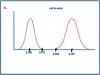
How can we draw a graph like this !!Assalam Wa'alaikum..
find the two extremes from mean ..
i.e 0.156+.001 = 0.157 at pH 4
0.197-0.013=0.184 at pH 5.2
this means the highest value at pH 4 could be 0.157 and lowest value for pH 5.2 could be 0.184 which are far away from each other
so when u will draw a curve, there will be no OVERLAP.
I made the graph too, ofcourse its not that good, but it'll do xD
- Messages
- 232
- Reaction score
- 103
- Points
- 38
I just took a google image and edited ...
How can we draw a graph like this !!
Will you have this ability to do it in the examsI just took a google image and edited ...
I mean how can we now the shapes , and draw the two curves ?

- Messages
- 62
- Reaction score
- 101
- Points
- 18
Will Statistical equations be provided during the exam ?
- Messages
- 62
- Reaction score
- 101
- Points
- 18
What are best ways to approach to a graph ?

- Messages
- 1
- Reaction score
- 1
- Points
- 1
You didn't mention the way to use a thread for measuring. knowitall10
- Messages
- 62
- Reaction score
- 101
- Points
- 18
Will there be a question for planning an experiment this year ? One that contains 7-8 points. I don't any see any question that gives me some outline to plan an experiment in 2012 papers.