- Messages
- 213
- Reaction score
- 9
- Points
- 28
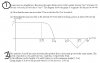
i solved part(ii) Q.5 also. For Q.7 use net force=ma
🚀 NEW from the xtremepape.rs team: AI exam prep — 150,000+ worked solutions, and it marks your handwritten working from a photo. Sign in with your forum account & try it free → prepare.xtremepape.rs

Sorry u didn't check the document again. U didn't find the value of k.i solved part(ii) Q.5 also. For Q.7 use net force=ma


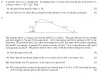
Hey thanks for the help, i'll try it again.7.i)
Using SUVAT again, except because you're on a slope you first need to split up the 60deg velocity into horizontal and vertical components. Horizontal component will be the same all the way up, but the vertical component will change, with a=-9.8 and s=2.5sin(60). Once you have the horizontal and vertical velocities, recombine to find the final speed.
ii)
Firstly, calculate the Kinetic Energy of the particle at B (KE = 0.5mv^2). Then imagine that was all converted to Gravitational Potential Energy (GPE = mgh). Equate KE = GPE and find h (I believe it will be 3.2)
iii)
Because by this stage, any GPE gained by the particle since it went past B will have been converted back into KE (assuming a perfect system)
iv)
Again, because you're on a slope, you need to split things into vertical and horizontal components. There are three things you need to be aware of - the inital speed, the frictional force and the acceleration due to gravity. You could either split the first two into horizontal and vertical components, or it would probably be quicker to instead resolve the acceleration due to gravity to work out the acceleration going down the slope. Up to you, whatever you find easier. Once you've resolved everything, it's pretty much just F=ma to work out the deceleration from friction, and finally work out speed through SUVAT.
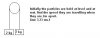
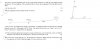
Hey anybody can help me with this, its quite urgent please.
View attachment 14578
Thanks loads1st hafta find the acceleration:
70N - T = 7a
T - 20N = 2a
therefore, a=50/9
then u=0, s=1m (because 2kg block went up 1m, 7kg block went down 1m, so totally 2m apart.)
v^2 = 0 + 2(50/9)(1)
v = 3.33
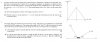
Can anybody out here help me with these:
(1) A particle of mass 100g moves in a straight line across a horizontal surface against resistances of constant magnitude. The particle passes through a point A with a speed of 7ms-1 and then through a point B with a speed of 3ms-1, B being 2 metres from A. Find the magnitude of the resistances.
For this my answer was 1000N but the book says its 1N, can you explain
Hey thanks.1st, find a, the acceleration,
since v=3, u=7, s=2 then a=-10,
then,
0-R=ma
R=-(0.1)(-10) = 1N
Can u help me in (2)
🚀 NEW from the xtremepape.rs team: AI exam prep — 150,000+ worked solutions, and it marks your handwritten working from a photo. Sign in with your forum account & try it free → prepare.xtremepape.rs