- Messages
- 185
- Reaction score
- 37
- Points
- 38

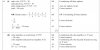
help in II
🚀 NEW from the xtremepape.rs team: AI exam prep — 150,000+ worked solutions, and it marks your handwritten working from a photo. Sign in with your forum account & try it free → prepare.xtremepape.rs
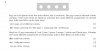
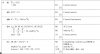

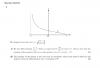

Knowing that u have idea about rules of differentiation. You might have reached to this step :
Thanks.Knowing that u have idea about rules of differentiation. You might have reached to this step :
(i)
dy/dx = -1/[(1 + x)^(3/2).(1 - x)^(1/2)]
Then split dy/dx = (1 + x)^(3/2).(1 - x)^(1/2)
you will obtain result similar to this : (1+x)(1+x)^(1/2).(1-x)^(1/2)
We know that,
(1+x)^(1/2).(1-x)^(1/2) = (1 - x^2)^(1/2)
So now dy/dx = -1/[(1 + x)^(3/2).(1 - x)^(1/2)] = -1 / (1+x).(1 - x^2)^(1/2)
Normal to it is -ve reciprocal of it = (1+x).(1 - x^2)^(1/2)
(ii)
Take y = (1+x).(1 - x^2)^(1/2)
differentiate it.
equate it to zero
obtain x = 1/2
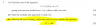

Could you please explain this part a little, how you got 1.281 from the table?2Ф (b/0.15) = 1.80
Ф (b/0.15) = 0.90
Using Normal Distribution tables,
b/0.15 = 1.281
b = 0.192 (3sf)
Just use quadratic equation:

I looked up this value from the Normal Distribution Table which is provided with the paper.Could you please explain this part a little, how you got 1.281 from the table?
You used value for 0.90 or what?I looked up this value from the Normal Distribution Table which is provided with the paper.
it's 0.8159 at 0.90I looked up this value from the Normal Distribution Table which is provided with the paper.
Yep! I looked up for the value of z which gives 0.90.You used value for 0.90 or what?
OH! I got that!!Yep! I looked up for the value of z which gives 0.90.
Just use quadratic equation:
a = 1
b = 2√3
c = 4
-->
b² = 4*3 = 12
and
4ac = 4*1*4 = 16
and
2a = 2*1 = 2
-->
(-2√3 ± √(12 - 16)) / 2
-->
√(12 - 16) = √(-4) = i√4 = 2i
-->
(-2√3 ± 2i) / 2
--> divide out the 2
√3 ± i
-->
the two roots are:
z = √3 + i
z = √3 - i
I'm not going to multiply that out to the 6th degree, it's easier if you convert to polar form, which I don't know if you've seen or not:
z = r * exp(iθ) = r * (cos(θ) + i * sin(θ))
So in this case the first root is in the first quadrant and we have:
tan(θ) = 1/√3
--> that's a 30-60-90 triangle and it's the smaller angle (i.e. 30° or π/6 radians)
the r is just the magnitude which is the square of the real and imaginary parts added up (then square rooted):
(√3)² + 1² = 3 + 1 = 4 --> √4 = 2
-->
r = 2
So we have:
z = √3 + i = 2 * exp(πi/6)
For the other one, it's the same angle, just in the 4th quadrant, so we get either:
-π/6 or 11π/6
Now raising to the 6th power is easy:
(2 * exp(±πi/6))^6 = 2^6 * exp(±πi/6 * 6) = 64 * exp(±πi)
But exp(±πi) = -1 (because we have cos(±π) + i * sin(±π) = -1 + 0 = -1
-->
So those roots do indeed satisfy the other equation (since you get 64 * -1 = -64)

Well i have no idea bt tht.. This is hw i do it.. So i did...
Is there any other method?
z^6 = (-√3 +i)^6
Wah xD thn wth im up to :/z^6 = (-√3 +i)^6
= (2(cos(5pi/6) + i sin(5pi/6)))^6
= 2^6 (cos 5pi + i sin5pi)
= -64
z^6 = (-√3 - i)^6
= (2(cos(-5pi/6) + i sin(-5pi/6)))^6
= 2^6 (cos(-5pi) + i sin (-5pi))
= -64
2^6 (cos 5pi + i sin5pi)
🚀 NEW from the xtremepape.rs team: AI exam prep — 150,000+ worked solutions, and it marks your handwritten working from a photo. Sign in with your forum account & try it free → prepare.xtremepape.rs