-
Prepare by Xtremepapers!
🚀 NEW from the xtremepape.rs team: AI exam prep — 150,000+ worked solutions, and it marks your handwritten working from a photo. Sign in with your forum account & try it free → prepare.xtremepape.rs
You are using an out of date browser. It may not display this or other websites correctly.
You should upgrade or use an alternative browser.
You should upgrade or use an alternative browser.
Physics: Post your doubts here!
- Thread starter XPFMember
- Start date
- Messages
- 398
- Reaction score
- 761
- Points
- 73
MashAllah(a) P=V^2/R
R=V^2/P = (240)2/(1.5 x 10^3)
=38.4 ohms
(b)
when the powers r in series then we will add their reciprocals n when they r in parallel then we will add their values...
1. there will be no current so no power will generate
2. when S2 is closed then current will choose the low resistance path n will only flow through one heater.. so 1.5kW
3. all of them r closed.. no current is passing through B.. so we will simply add the powers that r in parallel with eachother.. 3 kW
4. the current is passing through A and B... so we will add the reciprocals of the powers n the ans will be 0.75 kW
5. Current is passing through all the heaters so... 0.75 + 1.5 = 2.25 kW
 !
!
- Messages
- 515
- Reaction score
- 1,447
- Points
- 153
MashAllah
- Messages
- 515
- Reaction score
- 1,447
- Points
- 153
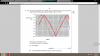
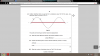
the peaks are curved not pointy like the one i've drawn in diagram 1....May/June 2011 Paper-23 6.(b) and c.(iv)...
Can anyone please draw the graphs of the waves and
Explain ASAP!!
for progressive wave the shape doesn't chnge...
for stationary after T/4 the wave becomes straight
Attachments
the peaks are curved not pointy like the one i've drawn in diagram 1....
for progressive wave the shape doesn't chnge...
for stationary after T/4 the wave becomes straight
Can u explain the stationary wave thing with a bit detail.

- Messages
- 174
- Reaction score
- 1,544
- Points
- 153
kindly someone answer this one toohttp://papers.xtremepapers.com/CIE/Cambridge International A and AS Level/Physics (9702)/9702_s12_qp_23.pdfMay/June 2012 paper 23
question 1 c(ii) part 1
Veactor triangle one
help please

- Messages
- 129
- Reaction score
- 203
- Points
- 53
http://papers.xtremepapers.com/CIE/...nd AS Level/Physics (9702)/9702_s10_ms_23.pdf
Q1 a ii)
How to do it i mean apart from adding 0.02, why do we add 0.01, is it because of the +-1 digit.
Q1 a ii)
How to do it i mean apart from adding 0.02, why do we add 0.01, is it because of the +-1 digit.
kindly someone answer this one too
- Messages
- 129
- Reaction score
- 203
- Points
- 53
Well power = rate of work done / energy consumed / energy lost
Here they are asking for which has higher rate of energy loss.
So if you have drawn the curve of component R.
You will notice that P.d (V) across C is much greater than R, at any given current.
And if you remember P = IV, thus Power for C is higher than R.
Thus the energy lost (dissipated) is higher in C than R.
But isn't the resistance of C decreasing with voltage? Why would the PD through it be greater than in R? Also, isn't the current through R constant? Why would there be a 'curve' for R?Well power = rate of work done / energy consumed / energy lost
Here they are asking for which has higher rate of energy loss.
So if you have drawn the curve of component R.
You will notice that P.d (V) across C is much greater than R, at any given current.
And if you remember P = IV, thus Power for C is higher than R.
Thus the energy lost (dissipated) is higher in C than R.
If it says .25T then phase difference will be 45 degree?the peaks are curved not pointy like the one i've drawn in diagram 1....
for progressive wave the shape doesn't chnge...
for stationary after T/4 the wave becomes straight
90 degrees I think.If it says .25T then phase difference will be 45 degree?
Please, explain to me this.90 degrees I think.
the peaks are curved not pointy like the one i've drawn in diagram 1....
for progressive wave the shape doesn't chnge...
for stationary after T/4 the wave becomes straight
1 complete wavelength=2pi radsPlease, explain to me this.
0.25 wavelength= 0.5 pi rads
0.5 pi = 90 degrees

- Messages
- 131
- Reaction score
- 220
- Points
- 43
1 complete wavelength=2pi rads
0.25 wavelength= 0.5 pi rads
0.5 pi = 90 degrees
i dnt get the first graph, why did it start from there?

- Messages
- 100
- Reaction score
- 185
- Points
- 53
please can someone explain the following questions as soon as possible. thnx in advance and please can u draw diagrams where necessary. thnk u very much.
1) 4b iv from papers.xtremepapers.com/CIE/Cambridge%20International%20A%20and%20AS%20Level/Physics%20(9702)/9702_w11_qp_23.pdf
2) 4b iii from papers.xtremepapers.com/CIE/Cambridge%20International%20A%20and%20AS%20Level/Physics%20(9702)/9702_w12_qp_21.pdf
3) 5b and 5c from papers.xtremepapers.com/CIE/Cambridge%20International%20A%20and%20AS%20Level/Physics%20(9702)/9702_w13_qp_22.pdf
4) 4b ii and 4b iii from papers.xtremepapers.com/CIE/Cambridge%20International%20A%20and%20AS%20Level/Physics%20(9702)/9702_w13_qp_23.pdf
9) 2b and 2 c from papers.xtremepapers.com/CIE/Cambridge%20International%20A%20and%20AS%20Level/Physics%20(9702)/9702_s12_qp_22.pdf
please help!!!
1) 4b iv from papers.xtremepapers.com/CIE/Cambridge%20International%20A%20and%20AS%20Level/Physics%20(9702)/9702_w11_qp_23.pdf
2) 4b iii from papers.xtremepapers.com/CIE/Cambridge%20International%20A%20and%20AS%20Level/Physics%20(9702)/9702_w12_qp_21.pdf
3) 5b and 5c from papers.xtremepapers.com/CIE/Cambridge%20International%20A%20and%20AS%20Level/Physics%20(9702)/9702_w13_qp_22.pdf
4) 4b ii and 4b iii from papers.xtremepapers.com/CIE/Cambridge%20International%20A%20and%20AS%20Level/Physics%20(9702)/9702_w13_qp_23.pdf
9) 2b and 2 c from papers.xtremepapers.com/CIE/Cambridge%20International%20A%20and%20AS%20Level/Physics%20(9702)/9702_s12_qp_22.pdf
please help!!!
- Messages
- 131
- Reaction score
- 220
- Points
- 43
the peaks are curved not pointy like the one i've drawn in diagram 1....
for progressive wave the shape doesn't chnge...
for stationary after T/4 the wave becomes straight
can you explain the first graph?
Even I'm so confused! I believe the graph should have started from 20cm.can you explain the first graph?
Thanks so much I posted this several times and I got the answer from only you.Hey, for part b)
This is the key for this question: For minima to occur: Path difference= 0.5Lambda, 1.5 Lambda. 2.5 Lambda and so on...
If you look at the figure, you'll see that it's a right angled triangle, use paythagors theorem. You'll get S2M= 128 cm
Path diff= 128 - 100= 28 cm
Your range is from 1khz to 4 kHz
Use v= lambda x frequency
Speed = 330 m/s
Range of lambda= 8.25 cm to 33cm
Now, start trying, remember path diff= nlambda
So 28= 0.5 x Lambda, 56 not in allowed range
28= 1.5 x lambda, 18.6 allowed range
28= 2.5 x lambda , 11.2 allowed range
So 2 minima occur