- Messages
- 438
- Reaction score
- 3,645
- Points
- 253
you'r welcomethanks alot man
🚀 NEW from the xtremepape.rs team: AI exam prep — 150,000+ worked solutions, and it marks your handwritten working from a photo. Sign in with your forum account & try it free → prepare.xtremepape.rs
you'r welcomethanks alot man
A bit confused. didn't the question ask 'what will the original kinetic energy become of 4J become'. you calculated the total energy????Initial kinetic energy of trolley = 4J
Consider the 1st case.
We need to consider the initial 4J here.
Final kinetic energy = 8J
Work done by force F (= Fs) = 8 – 4 = 4J
So, Fs = 4J
Consider the 2nd case.
Work done by force 2F = (2F) (2s) = 4(Fs) = 4(4) = 16J since Fs = 4J
Total kinetic energy = 4 + 16 = 20J

Yupp 4 grids when you find the time for the whole wavelenght and 2 grids for time b/w X and Y yunnothankyou so much but the answer is B not D so i should be getting 4 grids
c =f* lamda
330÷ 66×10^-2
500 hz = 2×10^-3 S
2 ms = which will occupy 4 boxes on the Cro
THANKYOU SO MUCH I did a silly mistake of not considering half the wavelenght..



ANYONE ??????
View attachment 62418
For those of you who couldn't solve this question :
Solution;
P=10^5-p(average)gh [ Basically you take the average density]
Question 15 Candidates found this question difficult. Atmospheric pressure is caused by the weight of air above the point, so the correct method is to calculate the pressure caused by the part of the atmosphere between sea level and 5000m, and to subtract this from the pressure at sea level. Candidates answering B or C had both calculated the pressure difference correctly using the average density; those choosing C gave the correct answer because they had subtracted the pressure difference from 100000Pa.
100000- ( 1.22+0.74/2)(9.7)(5000))that's what I did. Can you plz show some working?
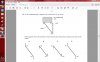
uhhh this question still baffles me..... couldn't explain why its BCan someone explain the forces acting on the beam?
View attachment 62445
i guess you can think of it in terms of rotation.Can someone explain the forces acting on the beam?
View attachment 62445

thanksQ4:T=1/f 1/50000 and divide this f by 2. This makes 1 complete wavelength in 2 divisions and hence you get C as the answer.
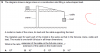
could you explain this part-----------> R4/(R3 + R4) * V = R2 /( R2 + R1 ) *VAmmeter reading = 0
P.D across junction = 0
P.D(R4) = P.D(R2 )
R4/(R3 + R4) * V = R2 /( R2 + R1 ) *V
(R2 + R1)* R4 = R2 *(R3 + R4)
R2R4 +R4R1 = R2R3 + R4R2
R4R1 = R2R3
AND = D
lol same i hardy get in the 30's in paper 1. The problem with this paper is that you easily gain marks and easily loose marks. this is because the questions CIE asks are so retarded..... like how am i suppose to know the order of magnitude of the young modulus of copper. Just pray you got above 80% in the other papers so even if you get 27 which is around 70% you can manage to scrape an A.I need serious help guys!
I manage 20-27 only in P1 no matter how hard I try what do I do to maximise test score, I have my bio exam tomorrow and I'm very nervous please help me

ans???que 13 please
Cans???
Momentum before=momentum after
Thankyou!Momentum before=momentum after
Mv+-mv=2mv
Hence the velocity after momentum=0m/s
Kinetic energy before= 1/2*mv^2+1/2mv^2=mv^2
Kinetic energy after= 1/2*2mv^2 but since velocity after collision is 0 energy is 0j
Kinetic energy loss= energy before-energy after= mv^2-0=mv^2
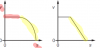
Sorry to post it here but can someone explain why is option A right? for Q7 papers.gceguide.com/A%20Levels/Physics%20(9702)/9702_m16_qp_12.pdf
🚀 NEW from the xtremepape.rs team: AI exam prep — 150,000+ worked solutions, and it marks your handwritten working from a photo. Sign in with your forum account & try it free → prepare.xtremepape.rs