- Messages
- 341
- Reaction score
- 224
- Points
- 53
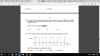
total resistance of circuit is 3 ohms,suppose the emf of cell is 12V.On lhs the pd would be 2/3*12=8v and on rhs 4v.So I1 would be 8/3=2.67A and I2 would be 4/2=2A so I1>I2
🚀 NEW from the xtremepape.rs team: AI exam prep — 150,000+ worked solutions, and it marks your handwritten working from a photo. Sign in with your forum account & try it free → prepare.xtremepape.rs
total resistance of circuit is 3 ohms,suppose the emf of cell is 12V.On lhs the pd would be 2/3*12=8v and on rhs 4v.So I1 would be 8/3=2.67A and I2 would be 4/2=2A so I1>I2
Thanks a lot for the answer .... but i really dont know how you get there...Answer is 4%?
Its 10^11What is the order of magnitude of the Young modulus for a metal such as copper?
A: 10^–11 Pa B: 10^–4 Pa C: 10^4 Pa D: 10^11 Pa
9702_w16_qp_11 Q.1
How do we even answer such questions?

thanksYou got me confused by the other answer
For A
Take combined resitance in both loops .
Right loop; Left loop;
1 ohm 2 ohm
V1 + V2 = emf
hence p.d V1 > V2
B and D are incorrect.
Right loop;
Both branches have equal resistances.
Right loop;
more current in 3 ohm resistor than 6 ohm (V=IR)
This gives I1 >I2
THanksTotal Resistance in the Loop where V1 is connected = 2 ohm
Total Resistance in the loop where v2 is connected = 1 ohm
Now, V1 > v2
Total current in the circuit will be divided equally in the second loop where I2 is labelled so I2 is half the current in the circuit. But I1 must be greater than the current in 6 ohm resistor. 2 (I2) = I1 + Current in 6 ohm resistor. Current in 6 ohm resistor must be less than I2.
Hence I1 > I2

I was interested to know whether my answer is right or not before posting the solution.Thanks a lot for the answer .... but i really dont know how you get there...
Just remember the YOUNG modulus for any object is 10^11.What is the order of magnitude of the Young modulus for a metal such as copper?
A: 10^–11 Pa B: 10^–4 Pa C: 10^4 Pa D: 10^11 Pa
9702_w16_qp_11 Q.1
How do we even answer such questions?
I was interested to know whether my answer is right or not before posting the solution.
Thanks it make some sense.R is directly proportional to the Length. So 4 times length = 4 times resistance
R is inversely proportional to the diameter square. Diameter is half so resistance is quadrupled. (4 * Resistance)
Combining both = 4 * 4 * R = 192 ohm..... I don't know if it is right
Yeah its right... but why do you add 0.8 and 0.2 rather than subtracting, because the zero error is minus 0.2

Speed = distance / time

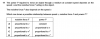
View attachment 62530
Anyone please help?


Take average of the two densities
Why? and then what?Take average of the two densities
1x10^5 - density * g*hWhy? and then what?
🚀 NEW from the xtremepape.rs team: AI exam prep — 150,000+ worked solutions, and it marks your handwritten working from a photo. Sign in with your forum account & try it free → prepare.xtremepape.rs