-
Prepare by Xtremepapers!
🚀 NEW from the xtremepape.rs team: AI exam prep — 150,000+ worked solutions, and it marks your handwritten working from a photo. Sign in with your forum account & try it free → prepare.xtremepape.rs
You are using an out of date browser. It may not display this or other websites correctly.
You should upgrade or use an alternative browser.
You should upgrade or use an alternative browser.
Chemistry: Post your doubts here!
- Thread starter XPFMember
- Start date

- Messages
- 321
- Reaction score
- 232
- Points
- 53
To date, I have not seen a single CIE, AQA, Edexcel or OCR, reference or endorsed, book that mentions this reaction (believe me, I've done my reading!). I found it on the internet when I first bumped into the MCQ.Actually in our class we have very well studied about H2 and its reducing ability. The fact is CIE are too buzzed to even correct the marking scheme, God knows whats up with them.

- Messages
- 438
- Reaction score
- 106
- Points
- 53
what reaction are you guys talking about?To date, I have not seen a single CIE, AQA, Edexcel or OCR, reference or endorsed, book that mentions this reaction (believe me, I've done my reading!). I found it on the internet when I first bumped into the MCQ.
- Messages
- 971
- Reaction score
- 532
- Points
- 103
Yeah, it's 24 dm^3 per mole, and 1 mole of O2 is 32 g. So basically, 24 dm^3 = 32 g of oxygen at room temperature which is what I did in my calculation. I have always used grams to solve these type of questions and I never get the answer wrong.. I'd be surprised if the examiners wouldn't accept this method..sounds okay. But if you have a look at your data booklet, it says that molar volume of gas under room conditions is 24 dm^3 per mole. So, preferably, work in moles.
I don't know if examiners will accept if u work in grams but to play safe, work in moles.
R
Reduction of carbonyl compounds by H2what reaction are you guys talking about?

- Messages
- 45
- Reaction score
- 71
- Points
- 28
can some1 plz tell me a better way to study bio chemistry .
- Messages
- 971
- Reaction score
- 532
- Points
- 103
Yeah there was only one MCQ (W07, P1, Q28) where you were required to know that H2 reduces a carbonyl compound. But you could have figured that out by eliminating all of the other options. Also, my teacher told me that he never told us this for P2 because the CIE wants us to quote NaBH4/LiAlH4 for that reaction instead, I don't know why though. But I don't think you need to know that carbonyl compounds can be reduced by H2, especially in P2.
- Messages
- 51
- Reaction score
- 22
- Points
- 18
bro plx mind that kinda language...+ what i said wasnt wrong.......in OUR CIE we dont use H2 to reduce carbonyl compoundsGet your facts straight. They are used to reduce them!

- Messages
- 59
- Reaction score
- 208
- Points
- 43
hi can anyone plz upload how to solve Q1 of P5??
plz i reallyy need ur help.. itll b better if u solve nd upload it.. thx
plz i reallyy need ur help.. itll b better if u solve nd upload it.. thx
- Messages
- 2
- Reaction score
- 0
- Points
- 11
need help in moles dont know a thing about would really pray for someone who explains me moles MAY ALLAH BLESS YOU ALLHi everyone, assalamoalaikum!!
To get things organized in a better way, I am making this thread. As othewise, some queries remain unanswered!
So post your CHEMISTRY doubts in this thread. InshaAllah other people here will help me and you all.
Any Chemistry related notes and links will be added here in this post. Feel free to provide the links to your notes around the forum, or any other websites!
Thanks!
Jazak Allah Khair!
Chemistry Notes:
Data Booklet
http://www.chemguide.co.uk This is the website, which contains almost everything classified according to the syllabus.
Some links & Notes - by 'destined007'
Chemistry worksheets Link shared by hassam
Chemistry Application Booklet: Mistakes and Corrections!
Calculations for A level Chemistry, author E.N. Ramsden third edition ebook download.
- Messages
- 438
- Reaction score
- 106
- Points
- 53
hmm its not in the AS syllabusR
Reduction of carbonyl compounds by H2
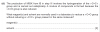
There is nothing obscene or foul in my 'language'. H2 reduces cabonyl compounds. Check my next post.bro plx mind that kinda language...+ what i said wasnt wrong.......in OUR CIE we dont use H2 to reduce carbonyl compounds
- Messages
- 438
- Reaction score
- 106
- Points
- 53
I haven't opened your file but does it reduce them to secondary alcohols?M/J 09 Variant 21. Read this part. The examiners are imposing the fact H2 reduces ketones.
- Messages
- 438
- Reaction score
- 106
- Points
- 53
anyway isn't it like common sense? When alcohols are oxidised to carbonyls... then why wouldn't carbonyls be reduced to alcohols?
Corrrect!I haven't opened your file but does it reduce them to secondary alcohols?
Ketones----> Secondary Alcohol (Reduction)
Aldeyhydes---> Primary Alcohol (Reduction)
The thing is people are saying that we don't have to study that H2 or the fact that they do reduce carbonyl compounds. Look at my pic, the examiners themselves have stated they do so!anyway isn't it like common sense? When alcohols are oxidised to carbonyls... then why wouldn't carbonyls be reduced to alcohols?
- Messages
- 438
- Reaction score
- 106
- Points
- 53
yeh yeh you're right .. and what's left to study in the reaction when we (these people included) just had a discussion over it.The thing is people are saying that we don't have to study that H2 or the fact that they do reduce carbonyl compounds. Look at my pic, the examiners themselves have stated they do so!
- Messages
- 438
- Reaction score
- 106
- Points
- 53
in the graph produced by the results of a mass spectrometer.... what's on the x axis?
in the graph produced by the results of a mass spectrometer.... what's on the x axis?
X-axis---> Isotope mass.
Y-axis---> % by mass.
BTW its always given in paper 2. You just need to know how to calculate relative atomic mass. You don't even need to know the working of Mass spectrometer.