
- Messages
- 152
- Reaction score
- 82
- Points
- 38
why is the answer of question number 40 'c'. Can anyone please explain. http://papers.xtremepapers.com/CIE/...and AS Level/Physics (9702)/9702_s07_qp_1.pdf
🚀 NEW from the xtremepape.rs team: AI exam prep — 150,000+ worked solutions, and it marks your handwritten working from a photo. Sign in with your forum account & try it free → prepare.xtremepape.rs
why is the answer of question number 40 'c'. Can anyone please explain. http://papers.xtremepapers.com/CIE/Cambridge International A and AS Level/Physics (9702)/9702_s07_qp_1.pdf
thanks manThat's a hard one.. My teacher had talked about this question before..
F=Vq/d=ma
so a Vq/md
let's take Li as an example, q for Li is 3 but m for Li is 7 (7 nucleons) , so a= 3/7 ( I ignore V and d cuz it's the same)
and after you work out the acceleration for other elements in this way, you will find Li has the smallest acceleration..


For question 26: I is directtly propotional to the Amplitude squareplease explain me question number 24 and 26. http://papers.xtremepapers.com/CIE/Cambridge International A and AS Level/Physics (9702)/9702_s08_qp_1.pdf
thanks manFor question 26: I is directtly propotional to the Amplitude square
and the given propotionality is I is inversely propotional to the the distance X
Now forget this and understand what i'm saying: A Is directly propotional to B,and B is Inversely propotional to the C
so it will be equal to the A is Inversely propitional to the C
NO WHAT THE QUESTION SAYS
I is directtly propotional to the Amplitude square
the given propotionality is I is inversely propotional to the the distance X
SO THE THIRD PROPOTIONALITY WILL BE :
Amplitude^2 inversely proptional to dstance X^2
so a1^2 x1^2=a2^2 X^2
a1^2=8.0 micrometres
x1^2=r
x2^2=2r
a2^2=?
so putting the values we get a=4.0 micrometres


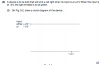

ok just see.isotopes are the atoms of the same element that has same proton number but different neutron number.so u can assume that p has a proton number of 60 and nucelon number of 90.do calculation and u will get bcan someone please explain mcq 40 of winter 2012 paper 11

http://tinypic.com/r/34p1j61/6 can anyone solve this questions and tell me why the answer is A littlecloud11 einstein
but the final speed in graph A is not same as initial speed of both skatersSmith and Jones are skating on a friction less surface hence, there's no loss of energy before or after throwing the ball. The initial and final speed for both skaters should be the same. Only graph A shows smith and Jones returning to their original speeds after the exchange.
sorry the correct answer is CSmith and Jones are skating on a friction less surface hence, there's no loss of energy before or after throwing the ball. The initial and final speed for both skaters should be the same. Only graph A shows smith and Jones returning to their original speeds after the exchange.
but the final speed in graph A is not same as initial speed of both skaters


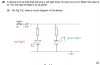

maybe the book is wrongIt is, the A is a speed time graph, the speed fluctuates between t1 and t2 and then comes back to the same horizontal axis so the speed is same.
🚀 NEW from the xtremepape.rs team: AI exam prep — 150,000+ worked solutions, and it marks your handwritten working from a photo. Sign in with your forum account & try it free → prepare.xtremepape.rs