- Messages
- 2,824
- Reaction score
- 3,730
- Points
- 273
Nov 2012, P13 --> Check the uploaded file
🚀 NEW from the xtremepape.rs team: AI exam prep — 150,000+ worked solutions, and it marks your handwritten working from a photo. Sign in with your forum account & try it free → prepare.xtremepape.rs
Nov 2012, P13 --> Check the uploaded file
You right-click 'reply' then click 'open in a new tab' and under the box you'll see 'upload a file'.

Please can u help with the following:
All from June 2011 P11 , may be some of them are a bit silly but I need help in them..
Q9, 15, 16, 25, 31 and 34


10. The man's motion is similar to the motion of a ball thrown upwards, except that when you throw a ball upwards, there is no horizontal component for the velocity (the ball moves only up and down, not sideways). The man's motion is a parabolic trajectory (projectile motion); the horizontal component of the velocity is always the same. Only the vertical changes. C must be ruled out because it shows velocity being 0 m/s at one instant; that isn't possible because there is a non-zero horizontal component and it's constant. A can be ruled out because it shows velocity increasing and then decreasing; velocity can't increase as the man jumps upwards because there is deceleration (the force of gravity acts opposite to the jump). B & D remain. They're almost the same; not sure why D's the answer.can anyone solve
http://papers.xtremepapers.com/CIE/...nd AS Level/Physics (9702)/9702_w12_qp_12.pdf Q 10 AND Q33
http://papers.xtremepapers.com/CIE/...nd AS Level/Physics (9702)/9702_s12_qp_12.pdf Q33
http://papers.xtremepapers.com/CIE/...nd AS Level/Physics (9702)/9702_w12_qp_11.pdf Q29
http://papers.xtremepapers.com/CIE/...nd AS Level/Physics (9702)/9702_w12_qp_13.pdf Q11
http://papers.xtremepapers.com/CIE/...nd AS Level/Physics (9702)/9702_w11_qp_11.pdf Q14
THANKS FOR YOUR HELP
thanks a lot10. The man's motion is similar to the motion of a ball thrown upwards, except that when you throw a ball upwards, there is no horizontal component for the velocity (the ball moves only up and down, not sideways). The man's motion is a parabolic trajectory (projectile motion); the horizontal component of the velocity is always the same. Only the vertical changes. C must be ruled out because it shows velocity being 0 m/s at one instant; that isn't possible because there is a non-zero horizontal component and it's constant. A can be ruled out because it shows velocity increasing and then decreasing; velocity can't increase as the man jumps upwards because there is deceleration (the force of gravity acts opposite to the jump). B & D remain. They're almost the same; not sure why D's the answer.
33. The distance travelled will be found using the suvat equations. The acceleration will have to be found. Since the plates are parallel, E (the electric field strength) is uniform. F=Eq=ma. Let q of the proton be 1 and of the alpha particle be 2.
Proton = E1=ma, therefore a=E/m.
Alpha particle = E2=ma, therefore a=2E/m.
So you see, the acceleration of the alpha particle is twice the acceleration of the proton.
s=1/2at^2. s is proportional to a and t. If a is times two, so too will be s.
33. A is wrong; charged particles aren't provided by the supply. B is wrong; current is not the speed, but the amount of charge per time. D is wrong; a wire with a smaller diameter will have a greater resistance, and therefore the electrons will move slowly through it.
29. No idea.
11. The initial momentum = 2mu-mu=mu. You have to work out the momentum of A, B, C & D. 3 of them will be mu, the other will be something different. That'll be inconsistent with the principle of conservation of momentum (because the final wouldn't = the initial).
can u please solve thank you10. The man's motion is similar to the motion of a ball thrown upwards, except that when you throw a ball upwards, there is no horizontal component for the velocity (the ball moves only up and down, not sideways). The man's motion is a parabolic trajectory (projectile motion); the horizontal component of the velocity is always the same. Only the vertical changes. C must be ruled out because it shows velocity being 0 m/s at one instant; that isn't possible because there is a non-zero horizontal component and it's constant. A can be ruled out because it shows velocity increasing and then decreasing; velocity can't increase as the man jumps upwards because there is deceleration (the force of gravity acts opposite to the jump). B & D remain. They're almost the same; not sure why D's the answer.
33. The distance travelled will be found using the suvat equations. The acceleration will have to be found. Since the plates are parallel, E (the electric field strength) is uniform. F=Eq=ma. Let q of the proton be 1 and of the alpha particle be 2.
Proton = E1=ma, therefore a=E/m.
Alpha particle = E2=ma, therefore a=2E/m.
So you see, the acceleration of the alpha particle is twice the acceleration of the proton.
s=1/2at^2. s is proportional to a and t. If a is times two, so too will be s.
33. A is wrong; charged particles aren't provided by the supply. B is wrong; current is not the speed, but the amount of charge per time. D is wrong; a wire with a smaller diameter will have a greater resistance, and therefore the electrons will move slowly through it.
29. No idea.
11. The initial momentum = 2mu-mu=mu. You have to work out the momentum of A, B, C & D. 3 of them will be mu, the other will be something different. That'll be inconsistent with the principle of conservation of momentum (because the final wouldn't = the initial).
14. 0.3 x 2sin50 (the vertical component is the only one that will have an effect on the rule; the horizontal goes right through the pivot).
can u please solve thank you
http://papers.xtremepapers.com/CIE/Cambridge International A and AS Level/Physics (9702)/9702_w12_qp_12.pdf Q 10
YES SORRY OK THANK YOUI guess I and h4rriet already explained it above..
http://papers.xtremepapers.com/CIE/...nd AS Level/Physics (9702)/9702_w11_qp_11.pdf Q18I guess I and h4rriet already explained it above..

10. The man's motion is similar to the motion of a ball thrown upwards, except that when you throw a ball upwards, there is no horizontal component for the velocity (the ball moves only up and down, not sideways). The man's motion is a parabolic trajectory (projectile motion); the horizontal component of the velocity is always the same. Only the vertical changes. C must be ruled out because it shows velocity being 0 m/s at one instant; that isn't possible because there is a non-zero horizontal component and it's constant. A can be ruled out because it shows velocity increasing and then decreasing; velocity can't increase as the man jumps upwards because there is deceleration (the force of gravity acts opposite to the jump). B & D remain. They're almost the same; not sure why D's the answer.
33. The distance travelled will be found using the suvat equations. The acceleration will have to be found. Since the plates are parallel, E (the electric field strength) is uniform. F=Eq=ma. Let q of the proton be 1 and of the alpha particle be 2.
Proton = E1=ma, therefore a=E/m.
Alpha particle = E2=ma, therefore a=2E/m.
So you see, the acceleration of the alpha particle is twice the acceleration of the proton.
s=1/2at^2. s is proportional to a and t. If a is times two, so too will be s.
33. A is wrong; charged particles aren't provided by the supply. B is wrong; current is not the speed, but the amount of charge per time. D is wrong; a wire with a smaller diameter will have a greater resistance, and therefore the electrons will move slowly through it.
29. No idea.
11. The initial momentum = 2mu-mu=mu. You have to work out the momentum of A, B, C & D. 3 of them will be mu, the other will be something different. That'll be inconsistent with the principle of conservation of momentum (because the final wouldn't = the initial).
14. 0.3 x 2sin50 (the vertical component is the only one that will have an effect on the rule; the horizontal goes right through the pivot).
can u solveI guess I and h4rriet already explained it above..
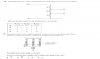
35. The voltage across R1 = 5-3=2 V, across R2 = 3-2=1 V, and R3 = 2 V. You can find the resistance of the resistor using the formula for potential dividers in series. For instance, the resistance in R1 can be found using the formula R1/(R1+R2+R3) x 5 = 2.any one help ?
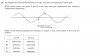
30. Charge = current x time. Average current = (100+20)/2 x 8.

🚀 NEW from the xtremepape.rs team: AI exam prep — 150,000+ worked solutions, and it marks your handwritten working from a photo. Sign in with your forum account & try it free → prepare.xtremepape.rs