- Messages
- 872
- Reaction score
- 894
- Points
- 103
Is the formula intensity=power/area in the as syllabus?
🚀 NEW from the xtremepape.rs team: AI exam prep — 150,000+ worked solutions, and it marks your handwritten working from a photo. Sign in with your forum account & try it free → prepare.xtremepape.rs
I haven't found that in papers but it was in the the physics AS and A Level Coursebook.Is the formula intensity=power/area in the as syllabus?


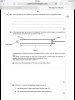
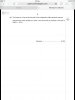

Lowest frequency will be the distance b/w node to anti node that is we no lambda/4..Can someone help me with c part of this question? View attachment 41777View attachment 41778


For b(ii) we take L as 60 cm right?Can someone help me with c part of this question? View attachment 41777View attachment 41778
The elastic potential energy is the energy under the graph. You count the number if small squares and multiply it by the area of one small square to find out the energy. The wire will be permantly stretched/extended a little since some if the energy has been converted into its inter al energy which has increased the spacing between its atoms and has hence permantly deformed it
which graph should we consider for it? upper or lower?The elastic potential energy is the energy under the graph. You count the number if small squares and multiply it by the area of one small square to find out the energy. The wire will be permantly stretched/extended a little since some if the energy has been converted into its inter al energy which has increased the spacing between its atoms and has hence permantly deformed it
Upper minus lower. The upper graph represents the energy absorbed by the wire to cause its extension l. The lower one represents the energy released by the wire to bring it back to its original position. But it doesn't return to its original position and the extra energy is stored as the wires internal energy or its elastic potential energywhich graph should we consider for it? upper or lower?
Emm no actuall y 45 i guess because its 3/4 of the waveFor b(ii) we take L as 60 cm right?
Is the lowest frequency always between the node and antinode?Lowest frequency will be the distance b/w node to anti node that is we no lambda/4..
So as we know L = 0.45 ; 0.45 = Lambda / 4 ; Lambda = 1.8 (Length = lambda / 4 used here)
Now, V = f * lambda ---> 330/1.8 is about 180 Hz
and yes thankyou by the wayLowest frequency will be the distance b/w node to anti node that is we no lambda/4..
So as we know L = 0.45 ; 0.45 = Lambda / 4 ; Lambda = 1.8 (Length = lambda / 4 used here)
Now, V = f * lambda ---> 330/1.8 is about 180 Hz
But how do we know its in the piston is in that position in the figure?Emm no actuall y 45 i guess because its 3/4 of the wave
When a loud sound is heardIs the lowest frequency always between the node and antinode?
I got no idea im confused!But how do we know its in the piston is in that position in the figure?

Cause in a thick rod both the sides have different extensions so it creates added stress on the rod which cause it to breakSuggest why a thin rod can bend more than a thick rod without breaking.
Explanation required.Thanks in advance.
🚀 NEW from the xtremepape.rs team: AI exam prep — 150,000+ worked solutions, and it marks your handwritten working from a photo. Sign in with your forum account & try it free → prepare.xtremepape.rs