- Messages
- 872
- Reaction score
- 894
- Points
- 103
qhttp://papers.xtremepapers.com/CIE/Cambridge%20International%20A%20and%20AS%20Level/Chemistry%20(9701)/9701_s13_qp_13.pdf 8
🚀 NEW from the xtremepape.rs team: AI exam prep — 150,000+ worked solutions, and it marks your handwritten working from a photo. Sign in with your forum account & try it free → prepare.xtremepape.rs

Metanoia http://papers.xtremepapers.com/CIE/... AS Level/Chemistry (9701)/9701_s13_qp_13.pdf q8 the ans is Dyes i made a mistake. it had to be x²

That'll be 3:2

Got it! Thank you so much!From half equation,
Tl+ --> Tl3+ + 2e
So 3 moles of Ti+ loses 6 moles of electrons to 2 moles of VO3+
1 mole of VO3+ gains 3 moles of electrons (oxidation state will decrease by 3 units)
V in VO3+ has original oxidation number of +5.
New oxidation number = +5 - 3 = +2

i dont get itaccording to boyle's law, p1v1 = p2v2
so when the 2 flask connect together, the total volume is now 1 + 2 = 3dm3
using the formula above , for flask X
- 1 x 2 = p x 3
- p = 2/3
for flask Y
- 2 x 1 = p x 3
- p = 2/3
therefore, the total pressure after both flask connect is 2/3 + 2/3 = 4/ 3
so answer is A.

Oct/ nov 2008
PLEASE HELP!!
Question 2 ans is C
4 answer is C
I don't understand 3 :$ answer is D
30 !! Answer is C
Please HELPPPP!!!
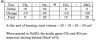

What i am doing is finidnt the pressure of the gas in flask X in Joinedi dont get it
if we calulate total volume to b 3 dm3 thn total pressure should b 2/3
need help in this question
Q: flask X contain 1 dm3 of helium at 2kpa pressure and flask Y contain 2 dm3 of neon at 1kpa pressure.
if the flasks are connected at constant temperature, what is the final pressure?
A: 4/3 kpa
B:3/2 kpa
C; 5/3 kpa
D:2 kpa
how do we solve it and answer is A
Q14. In a way, this is more of a recall question (although of course students can study the reasons behind the trends).
For the solubility , if it helps, recall that Barium sulfate is insoluble.
So it gets less soluble for the sulfates down the group.
For hydroxides, the solubility is the opposite.
the data booklet says 994N to N bond is 944 not 994.
i got it thanku vry muchWhat i am doing is finidnt the pressure of the gas in flask X in Joined
and the presuure of gas in flask Y when joined
they both apply pressure in the final volumne
thanku vry muchFocus on individual gases first.
Helium exerted 2kPa of pressure when occupying 1dm^3 at start, what pressure did it exert when it occupies 3 dm^3 at the end?
Pressure (start) x volume (start) = pressure (end) x volume (end)
2 x 1 = pressure (end) x 3
pressure (end) = 2/3 kPa from helium
Neon exerted 1kPa of pressure when occupying 2dm^3 at start, what pressure did it exert when it occupies 3 dm^3 at the end?
Pressure (start) x volume (start) = pressure (end) x volume (end)
1 x 2 = pressure (end) x 3
pressure (end) = 2/3 kPa from Neon
Total pressure of Ne + He = 4/3 kPa
🚀 NEW from the xtremepape.rs team: AI exam prep — 150,000+ worked solutions, and it marks your handwritten working from a photo. Sign in with your forum account & try it free → prepare.xtremepape.rs