- Messages
- 275
- Reaction score
- 558
- Points
- 103
k thnk uAlready explained this. It's the first post on this page.

🚀 NEW from the xtremepape.rs team: AI exam prep — 150,000+ worked solutions, and it marks your handwritten working from a photo. Sign in with your forum account & try it free → prepare.xtremepape.rs
k thnk uAlready explained this. It's the first post on this page.
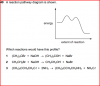


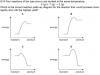
The graph represents a two step reaction because of the two dips visible. So from all of those 3 options you need to eliminate the single step reactions.
All of the options presented are of halogenoalkanes under going substitution reactions with NaOH or NH3.
A key factor is the degree of each, that is whether they are primary, secondary or tertiary.
Option 1, the Carbon holding the Halide ion is attached to 3 other carbons, this makes it a tertiary halogenoalkane. These undergo two-step SN1 reactions that are split into a slow stage and then a fast stage.
Option 2, the Carbon holding the Halide ion is attached to 1 other carbon, making it a primary halogenoalkane. These undergo single-step SN2 reactions in which there is a single transition state.
Option 3 is another example of a primary halogenoalkane that will undergo a SN2 reaction.
So from all of the above cases, Option 1 is the only reaction that proceeds under two different stages, a slow and a fast one, which are distinguishable by the steepness of the gradients on the graph.
So your answer will be D.
X is a mixture of two compounds of Group II elements. X can undergo thermal decomposition to produce a white solid and only two gaseous products. One of the gaseous products relights a glowing splint. What could be the components of mixture X?
A MgCl 2 and CaCO3
B MgCO3 and Ca(NO3)2
C Mg(NO3)2 and Ca(NO3)2
D MgO and CaSO4
the answer is C... how can you distinguish between all the options and conclude that C is the right one? i suck at periodicity... any advice?
View attachment 52141
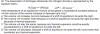
Answer is B
View attachment 52142
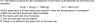
Answer is A
Why? Why not C since the forward reaction is exothermic increasing temperature would the favour the reactants side right?
Equilibrium means that the rate of forward reaction is equal to the rate of backward reaction.Increasing the temperature will increase the rates of both the forward and backward reactions, it's just that the backward reaction will increase at a faster rate.
Remember, the reaction is in equilibrium.
Equilibrium has to be dynamic, in that, both the forward and backward reactions must be equal. If you only have one increasing, there will be an imbalance and so no equilibrium would exist.
View attachment 52145
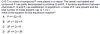
How would I solve this? ,_,
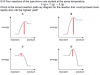
Equilibrium means that the rate of forward reaction is equal to the rate of backward reaction.
So they increased the temperature and still want it to be in Equilibrium?
When the temperature is increased the temperature more of products will be formed since forward reaction is exothermic....but since they want equilibrium both sides increase...
Did I get it right ?
Why are BOTH increasing?Both will increase, just one increases faster than the other to produce the yield faster.
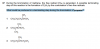 AND EXPLAINN THANKYOU
 🚀 NEW from the xtremepape.rs team: AI exam prep — 150,000+ worked solutions, and it marks your handwritten working from a photo. Sign in with your forum account & try it free → prepare.xtremepape.rs