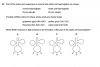
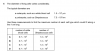
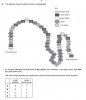
Again, let me break this down for you. As I explain all the options you'll understand the answer.Need help understanding this one too. Stuck between option A and C.
Why it's not A: When we say "contain something" that means that we're trying to modify something in order to be able to store it in. So, for example, we know the DNA is coiled around nucleosomes (8 histone proteins) in order to avoid DNA knotting AND to actually fit the DNA because DNA is about 2 m long while the nucleus is 6 micrometers! so it makes sense to say the DNA is folded to bla bla bla but talking about option A , they attach to spindle fibers to be arranged in the equator and to be pulled to opposite poles, as simple as that, they are already fit into the nucleus so it makes no sense to say that these chromosomes have already been in the cell during interphase and were even longer yet they fit perfectly in the cell, that's why when you go through option C you'll understand what I'm saying. Sometimes in such cases when you're really confused don't rely only on your theory, imagine the processes it'll turn out more logical.
Why its not B: First, its definitely right that they condense because they don't want to express any genes or activities, and more precisely they don't want to undergo transcription, so them saying that "translating genes", PLUS we don't translate genes we translate mRNA so the sentence structure is wrong.
Why its C: That's true, during telophase they move to opposite poles, recoil, become longer, thinner and that's why they become no more visible under a light microscope.
Why it's not D: The sentence is hilarious, it's not the chromosomes that replicate to produce DNA, and "sufficient" basically isn't the right word to use here at all
I hope I made enough sense