-
Prepare by Xtremepapers!
🚀 NEW from the xtremepape.rs team: AI exam prep — 150,000+ worked solutions, and it marks your handwritten working from a photo. Sign in with your forum account & try it free → prepare.xtremepape.rs
You are using an out of date browser. It may not display this or other websites correctly.
You should upgrade or use an alternative browser.
You should upgrade or use an alternative browser.
Chemistry: Post your doubts here!
- Thread starter XPFMember
- Start date

- Messages
- 2,951
- Reaction score
- 17,783
- Points
- 523
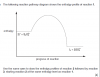
to form da intermidiate, bonds need 2 b BROKEN and breaking of bonds takes IN energy....... dats why delta H is postive....why the intermediate ahud have +ve delta H
BROTHER.....i thought
like this that if it was it must be positive delta H so that it is unstable and is converted further to products...........if it is already -ve delta H then it ll be already stable....well bond breaking explanation cn not be used in all situation ....it works perfectly well for SN1 rreaction profile....wat do ya say
like this that if it was it must be positive delta H so that it is unstable and is converted further to products...........if it is already -ve delta H then it ll be already stable....well bond breaking explanation cn not be used in all situation ....it works perfectly well for SN1 rreaction profile....wat do ya say
- Messages
- 2,951
- Reaction score
- 17,783
- Points
- 523
its sister accBROTHER.....i thought
like this that if it was it must be positive delta H so that it is unstable and is converted further to products...........if it is already -ve delta H then it ll be already stable....well bond breaking explanation cn not be used in all situation ....it works perfectly well for SN1 rreaction profile....wat do ya say

yes ur thinking is ryt... it IS unstable so it breaks down.... n dats cuz it has taken IN energy (+ve delta H)...
n no dis isnt 4 SN1 only.... its a general explanation
from the figure we can see that the reaction is endothermic which means obviously there will be delta H will be positive !!!why the intermediate ahud have +ve delta H

- Messages
- 39
- Reaction score
- 3
- Points
- 8
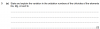
Help with this question please.. It's from M/J 11 41

- Messages
- 260
- Reaction score
- 104
- Points
- 53
The oxidation number goes from +1 (for Na) to +4 (for Si) step by step.Help with this question please.. It's from M/J 11 41
"State and explain the variation in the oxidation numbers of the chlorides of the elements Na, Mg, Al and Si."
You need to talk about the number of electrons in the outer shell of each element and thus their ions' bonding abilities to the chloride ions.
- Messages
- 260
- Reaction score
- 104
- Points
- 53
Hi guys
Can anyone tell me something about complex ions? One past paper question asked me to draw the displayed shape of d-orbitals of metal cation in complex ions, and to explain the energy differences among the d-orbitals. I felt like my teacher did not mention this part.
Can anyone tell me something about complex ions? One past paper question asked me to draw the displayed shape of d-orbitals of metal cation in complex ions, and to explain the energy differences among the d-orbitals. I felt like my teacher did not mention this part.
- Messages
- 39
- Reaction score
- 3
- Points
- 8
ohh so they meant the oxidation number of the ions Mg, si and so on.. damn, i thought the Chloride ionsThe oxidation number goes from +1 (for Na) to +4 (for Si) step by step.
You need to talk about the number of electrons in the outer shell of each element and thus their ions' bonding abilities to the chloride ions.
- Messages
- 347
- Reaction score
- 17
- Points
- 28
in Q5 part b..why does the marking scheme give positive E values? im getting negative..
http://www.xtremepapers.com/papers/... AS Level/Chemistry (9701)/9701_w10_qp_43.pdf
http://www.xtremepapers.com/papers/... AS Level/Chemistry (9701)/9701_w10_qp_43.pdf
- Messages
- 39
- Reaction score
- 3
- Points
- 8
yes, u just draw any one of the dx^2-y^2 or dxy orbitals on axes and label them.. then u explain the energy differences, by reference to the fact that thereHi guys
Can anyone tell me something about complex ions? One past paper question asked me to draw the displayed shape of d-orbitals of metal cation in complex ions, and to explain the energy differences among the d-orbitals. I felt like my teacher did not mention this part.
is repulsion between the lone pairs of ligands and the orbitals which split them in two levels. three orbitals lower of two stay above of the d-orbital..

- Messages
- 165
- Reaction score
- 106
- Points
- 28
Does anyone have the mark scheme for M/J 02 paper 4? If so, could you please upload it? Thanks!

- Messages
- 318
- Reaction score
- 328
- Points
- 73
Can someone help me with these questions?
This is the third time im posting them.
Please and Thank you.....
http://www.xtremepapers.com/papers/...d AS Level/Chemistry (9701)/9701_w07_qp_1.pdf
Q9(had very little idea about how to approach this question and ended up guessing the answer) and Q36
http://www.xtremepapers.com/papers/...d AS Level/Chemistry (9701)/9701_w08_qp_1.pdf
Q3 What does 'ground state' mean? And r we supposed to rite the 1s2 2s2.... electronic configuration to know the answer?
Q21 Does an alcohol get oxidised by hot, concentrated manganate(7) ions?
Q31 Why is the answer B not A? all the three statements seem correct.
and Q38 Why cant the answer be B?
Please and Thank you.....
http://www.xtremepapers.com/papers/...d AS Level/Chemistry (9701)/9701_w07_qp_1.pdf
Q9(had very little idea about how to approach this question and ended up guessing the answer) and Q36
http://www.xtremepapers.com/papers/...d AS Level/Chemistry (9701)/9701_w08_qp_1.pdf
Q3 What does 'ground state' mean? And r we supposed to rite the 1s2 2s2.... electronic configuration to know the answer?
Q21 Does an alcohol get oxidised by hot, concentrated manganate(7) ions?
Q31 Why is the answer B not A? all the three statements seem correct.
and Q38 Why cant the answer be B?
- Messages
- 347
- Reaction score
- 17
- Points
- 28
http://www.xtremepapers.com/papers/...d AS Level/Chemistry (9701)/9701_s08_qp_4.pdf
Q2 a iii.. how do we balance the equation using oxidation numbers?
Q2 a iii.. how do we balance the equation using oxidation numbers?
- Messages
- 260
- Reaction score
- 104
- Points
- 53
To W07 Q9, is the answer B?Can someone help me with these questions?This is the third time im posting them.Please and Thank you.....Q9(had very little idea about how to approach this question and ended up guessing the answer) and Q36Q3 What does 'ground state' mean? And r we supposed to rite the 1s2 2s2.... electronic configuration to know the answer?Q21 Does an alcohol get oxidised by hot, concentrated manganate(7) ions?Q31 Why is the answer B not A? all the three statements seem correct.and Q38 Why cant the answer be B?
This is a redox reaction, with the sulphite oxidised to sulphate. Oxidation and reduction always come together. With sulphur oxidised, the "metal" must be reduced. You can see the change in oxidation number of sulphur is plus 2 (from +4 to +6). So if 1 mole of "metal" reacts with 1 mole of sulphite, the "metal" should experience a change of minus 2 in its oxidation number in order to compensate the oxidation. In this case, according to the volumes and molar concentrations, the mole ratio of "metal" to sulphite is 2 : 1, so the "metal" is reduced by only 1 oxidation number, so it's from +3 to +2.
W07 Q36,
1 should not be correct. The reaction must happen since sulphuric acid is acidic and potassium iodide is basic.
2 is correct since concentrated sulphuric acid is a strong oxidising agent, and iodide ion is a fairly good reducing agent, the redox reaction shall take place.
3... I cannot be sure, but that 1 is wrong and 2 is correct shall make you able to deduce that the answer is C.
- Messages
- 347
- Reaction score
- 17
- Points
- 28
http://www.xtremepapers.com/papers/...d AS Level/Chemistry (9701)/9701_w04_qp_4.pdf
in Q2 part e.. isnt the ratio of electrons to hydrogen 2:1.. hence when we get mol of electron by 345600/96500 we divide it by 2 to get get mol of hydrogen wich will also be its mass? PLEASE ANSWER
in Q2 part e.. isnt the ratio of electrons to hydrogen 2:1.. hence when we get mol of electron by 345600/96500 we divide it by 2 to get get mol of hydrogen wich will also be its mass? PLEASE ANSWER
http://www.xtremepapers.com/papers/... AS Level/Chemistry (9701)/9701_s10_qp_42.pdf
q3 c (i) carbon aslo has an empty 2p orbital so why it cant react
q3 c (i) carbon aslo has an empty 2p orbital so why it cant react
- Messages
- 51
- Reaction score
- 3
- Points
- 8
please somebody explain the ratio question in november 2011 paper 43 q5

- Messages
- 120
- Reaction score
- 17
- Points
- 28
cool explanationAoA,
Q7:
1 is tetrahedral so 109 degrees
2 is trigonal planar so 120 degrees [Remember that pie bons are not considered while checking bond angles!]
3 is bent / v-shaped so 105 degrees
So, smallest first, it is 3 < 1 < 2
So, C is correct!
Q8:
Hess Law:
View attachment 6991
Enthalpy change = 4(-394) + 5(-286) - (-2877) = - 129 kJ mol-1
So, the answer is B
Q10:
Kc = [CH3CO2C2H5] [H2O] / [C2H5OH] [CH3CO2H]
4 = (x)(x) / (1-x)(1-x)
4 = (x / 1 - x)^2
(x / 1 - x)^2 = 4
Taking square root
x / 1 - x = 2
x = 2 - 2x
3x = 2
x = 2/3
So, B is the answer!