-
Prepare by Xtremepapers!
🚀 NEW from the xtremepape.rs team: AI exam prep — 150,000+ worked solutions, and it marks your handwritten working from a photo. Sign in with your forum account & try it free → prepare.xtremepape.rs
You are using an out of date browser. It may not display this or other websites correctly.
You should upgrade or use an alternative browser.
You should upgrade or use an alternative browser.
Chemistry: Post your doubts here!
- Thread starter XPFMember
- Start date

- Messages
- 1,229
- Reaction score
- 740
- Points
- 123
Why is it C and not B,anyone??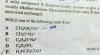
- Messages
- 1,229
- Reaction score
- 740
- Points
- 123
What's wrong in E and D?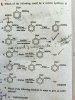
- Messages
- 1,229
- Reaction score
- 740
- Points
- 123
Why is 2 wrong?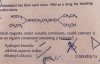
- Messages
- 54
- Reaction score
- 46
- Points
- 28
Please I want a quick reply of this question
Element Z has two isotopes Z 55 and Z 57 with the abundance ratio of 2:1 it exists in nature as Z3. The ratio of the peaks at m/e ratios 165:167:169:171 is 8 : x :y :1. What are the values of x and y. Please I need an urgent reply of this. Thanks.
Element Z has two isotopes Z 55 and Z 57 with the abundance ratio of 2:1 it exists in nature as Z3. The ratio of the peaks at m/e ratios 165:167:169:171 is 8 : x :y :1. What are the values of x and y. Please I need an urgent reply of this. Thanks.
The density of ice is 1.00 g cm–3.
What is the volume of steam produced when 1.00 cm3 of ice is heated to 323 °C (596 K) at a pressure of one atmosphere (101 kPa)?
[1 mol of a gas occupies 24.0 dm3 at 25 °C (298 K) and one atmosphere.]
A 0.267 dm3 B 1.33 dm3 C 2.67 dm3 D 48.0 dm3
Can someone help me with this !
What is the volume of steam produced when 1.00 cm3 of ice is heated to 323 °C (596 K) at a pressure of one atmosphere (101 kPa)?
[1 mol of a gas occupies 24.0 dm3 at 25 °C (298 K) and one atmosphere.]
A 0.267 dm3 B 1.33 dm3 C 2.67 dm3 D 48.0 dm3
Can someone help me with this !
Would be glad if anyone out there could help me with these questions.
( I need simple explanations)
Which gas is likely to deviate most from ideal gas behaviour?
A HCl B He C CH4 D N2
The answer is A NOT C .....Why?
Flask X contains 5 dm3 of helium at 12 kPa pressure and flask Y contains 10 dm3 of neon at 6 kPa pressure.
If the flasks are connected at constant temperature, what is the final pressure?(The answer is A)
A 8 kPa B 9 kPa C 10 kPa D 11 kPa
I don't get this!!
Q9 Use of the Data Booklet is relevant to this question.
The volume of a sample of ammonia is measured at a temperature of 60 °C and a pressure of 103 kPa. The volume measured is 5.37 × 10⁻³ m3.
What is the mass of the sample of ammonia, given to two significant figures?
A 0.00019 g B 0.0034 g C 0.19 g D 3.4 g
No matter how many times I try it my answer is None of the above!
Section B
An ideal gas obeys the gas laws under all conditions of temperature and pressure.
Which of the following are true for an ideal gas?
1 The molecules have negligible volume.
2 There are no forces of attraction between molecules.
3 The molecules have an average kinetic energy which is proportional to its absolute
temperature.
Third point states
The molecules have an average kinetic energy which is proportional to its absolute
temperature.
The kinetic energy and temperature are related and as one increases so does the other....is this what it says ?
When a sample of a gas is compressed at constant temperature from 1500 kPa to 6000 kPa, its volume changes from 76.0 cm3 to 20.5 cm3.
Which statements are possible explanations for this behaviour?
1 The gas behaves non-ideally.
2 The gas partially liquefies.
3 Gas is adsorbed on to the vessel walls.
Second point;2 The gas partially liquefies.
Why isn't this correct?
( I need simple explanations)
Which gas is likely to deviate most from ideal gas behaviour?
A HCl B He C CH4 D N2
The answer is A NOT C .....Why?
Flask X contains 5 dm3 of helium at 12 kPa pressure and flask Y contains 10 dm3 of neon at 6 kPa pressure.
If the flasks are connected at constant temperature, what is the final pressure?(The answer is A)
A 8 kPa B 9 kPa C 10 kPa D 11 kPa
I don't get this!!
Q9 Use of the Data Booklet is relevant to this question.
The volume of a sample of ammonia is measured at a temperature of 60 °C and a pressure of 103 kPa. The volume measured is 5.37 × 10⁻³ m3.
What is the mass of the sample of ammonia, given to two significant figures?
A 0.00019 g B 0.0034 g C 0.19 g D 3.4 g
No matter how many times I try it my answer is None of the above!
Section B
An ideal gas obeys the gas laws under all conditions of temperature and pressure.
Which of the following are true for an ideal gas?
1 The molecules have negligible volume.
2 There are no forces of attraction between molecules.
3 The molecules have an average kinetic energy which is proportional to its absolute
temperature.
Third point states
The molecules have an average kinetic energy which is proportional to its absolute
temperature.
The kinetic energy and temperature are related and as one increases so does the other....is this what it says ?
When a sample of a gas is compressed at constant temperature from 1500 kPa to 6000 kPa, its volume changes from 76.0 cm3 to 20.5 cm3.
Which statements are possible explanations for this behaviour?
1 The gas behaves non-ideally.
2 The gas partially liquefies.
3 Gas is adsorbed on to the vessel walls.
Second point;2 The gas partially liquefies.
Why isn't this correct?
Last edited:
Last edited:

- Messages
- 1,432
- Reaction score
- 6,887
- Points
- 523
My Name which one? 
the two posts aboveMy Name which one?
1=My Name which one?
The density of ice is 1.00 g cm–3.
What is the volume of steam produced when 1.00 cm3 of ice is heated to 323 °C (596 K) at a pressure of one atmosphere (101 kPa)?
[1 mol of a gas occupies 24.0 dm3 at 25 °C (298 K) and one atmosphere.]
A 0.267 dm3 B 1.33 dm3 C 2.67 dm3 D 48.0 dm3
Can someone help me with this !
RoOkaYya G
Would be glad if anyone out there could help me with these questions.
( I need simple explanations)
Which gas is likely to deviate most from ideal gas behaviour?
A HCl B He C CH4 D N2
The answer is A NOT C .....Why?
Flask X contains 5 dm3 of helium at 12 kPa pressure and flask Y contains 10 dm3 of neon at 6 kPa pressure.
If the flasks are connected at constant temperature, what is the final pressure?(The answer is A)
A 8 kPa B 9 kPa C 10 kPa D 11 kPa
I don't get this!!
Q9 Use of the Data Booklet is relevant to this question.
The volume of a sample of ammonia is measured at a temperature of 60 °C and a pressure of 103 kPa. The volume measured is 5.37 × 10⁻³ m3.
What is the mass of the sample of ammonia, given to two significant figures?
A 0.00019 g B 0.0034 g C 0.19 g D 3.4 g
No matter how many times I try it my answer is None of the above!
Section B
An ideal gas obeys the gas laws under all conditions of temperature and pressure.
Which of the following are true for an ideal gas?
1 The molecules have negligible volume.
2 There are no forces of attraction between molecules.
3 The molecules have an average kinetic energy which is proportional to its absolute
temperature.
Third point states
The molecules have an average kinetic energy which is proportional to its absolute
temperature.
The kinetic energy and temperature are related and as one increases so does the other....is this what it says ?
When a sample of a gas is compressed at constant temperature from 1500 kPa to 6000 kPa, its volume changes from 76.0 cm3 to 20.5 cm3.
Which statements are possible explanations for this behaviour?
1 The gas behaves non-ideally.
2 The gas partially liquefies.
3 Gas is adsorbed on to the vessel walls.
Second point;2 The gas partially liquefies.
Why isn't this correct?
- Messages
- 1,432
- Reaction score
- 6,887
- Points
- 523
use pV=nRT equation n replace1=
The density of ice is 1.00 g cm–3.
What is the volume of steam produced when 1.00 cm3 of ice is heated to 323 °C (596 K) at a pressure of one atmosphere (101 kPa)?
[1 mol of a gas occupies 24.0 dm3 at 25 °C (298 K) and one atmosphere.]
A 0.267 dm3 B 1.33 dm3 C 2.67 dm3 D 48.0 dm3
Can someone help me with this !
- Messages
- 1,432
- Reaction score
- 6,887
- Points
- 523
*_* i forgot my theory
sorry
i know thatuse pV=nRT equation n replace
idk i m not getting the answer
can u solve it ?
It's ok,thnx anyway*_* i forgot my theory
sorry
- Messages
- 1,432
- Reaction score
- 6,887
- Points
- 523
It's ok,thnx anyway
sorry
- Messages
- 6,392
- Reaction score
- 27,002
- Points
- 718
here you go -->http://papers.xtremepapers.com/CIE/Cambridge International A and AS Level/Chemistry (9701)/9701_s10_qp_21.pdf
question 2 part c-ii
Where and why would C be ?
can some one answer this
Plz and thanku
 just see this type of graph in coursebook . Well when we use catalyst it's main FUNCTION IS TO LOWER THE ACTIVATION ENERGY. So as shown in graph it lowers the activation energy. Also the particles having energy to react increases in presence of catalyst.
 I hope you got it