- Messages
- 1,318
- Reaction score
- 1,374
- Points
- 173
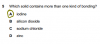
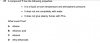
What bondings do each contain?
🚀 NEW from the xtremepape.rs team: AI exam prep — 150,000+ worked solutions, and it marks your handwritten working from a photo. Sign in with your forum account & try it free → prepare.xtremepape.rs

View attachment 54304
How to do this one?
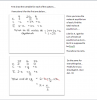
I form the table but then I don't know what to do (which values for P and Q?)

View attachment 54310
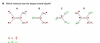
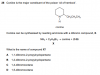
Have i marked the dipoles correctly? And why B? why not the others?
Thanks! So it's always trial and error? There's no way to work it out directly right?This requires a bit of trial and error. The answer is D.
Thanks! So it's always trial and error? There's no way to work it out directly right?

View attachment 54313
Wouldn't A form H2O2 ?
And if not what will it form? like what would the equation be?

No, it would not be correct. The signs + and - are very important in Hess Law reactions, and it is important to keep them in mind while attempting questions of this sort.
but why? why wud that be not correct?

View attachment 54304
How to do this one?
I form the table but then I don't know what to do (which values for P and Q?)
help with this please
Iodine: Covalent and van der waals forces
oh.. I get your point but why not B?The answer is A.
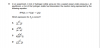
From the diagram and the arrow showing the enthalpy change of formation, we can conclude that the bottommost layer is CO2(g).
Thus, the second from bottom level has to be Option C, which shows the elements in their standard states. Working our way upwards, we can see that the change from Option B to Option A is an enthalpy change of vaporisation, which is positive. Therefore, A is the top level.
🚀 NEW from the xtremepape.rs team: AI exam prep — 150,000+ worked solutions, and it marks your handwritten working from a photo. Sign in with your forum account & try it free → prepare.xtremepape.rs