- Messages
- 1,229
- Reaction score
- 740
- Points
- 123
How? If I use Ch3CHFCl lets say, I can make structural isomers like Ch2FCh2ClIt will not necessarily have structural isomers.
 ?
?🚀 NEW from the xtremepape.rs team: AI exam prep — 150,000+ worked solutions, and it marks your handwritten working from a photo. Sign in with your forum account & try it free → prepare.xtremepape.rs
How? If I use Ch3CHFCl lets say, I can make structural isomers like Ch2FCh2ClIt will not necessarily have structural isomers.
?
How? If I use Ch3CHFCl lets say, I can make structural isomers like Ch2FCh2Cl

But removing H atom at the blue dot gives us option C too ;/ How do we know which C ( red Or blue) shud lose H?
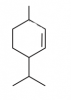

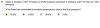
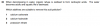
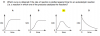
View attachment 54546
I know that the answer is A
But i was wondering what would the product of this reaction in C be??

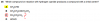
How else would the reaction stop?View attachment 54548
Why would the rate decrease after some time (C)??
3 is a neutral salt but it doesnt make the water neutral....View attachment 54547
Why is 3 wrong?
The first two options will neutralize the acid. How will potassium nitrate, a salt, react with the acid? It wouldn't.View attachment 54547
Why is 3 wrong?
View attachment 54548
Why would the rate decrease after some time (C)??
PV = nRTView attachment 54545
How to do this?

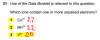
But the products are catalysing the reaction... so why would it need to stop?How else would the reaction stop?
But A and B will run out at some pointBut the products are catalysing the reaction... so why would it need to stop?
example : A + B = C
C keeps on catalysing the reaction A + B right?
View attachment 54550
I thought D... but it's C
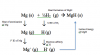
Can someone summarize the 2 reactions with equations please?
🚀 NEW from the xtremepape.rs team: AI exam prep — 150,000+ worked solutions, and it marks your handwritten working from a photo. Sign in with your forum account & try it free → prepare.xtremepape.rs