- Messages
- 603
- Reaction score
- 1,102
- Points
- 153
View attachment 63773
can someone help me with this question?
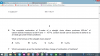
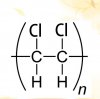
The free radical is a chlorine atom.
Statement 1 is wrong as its a homolytic fission
🚀 NEW from the xtremepape.rs team: AI exam prep — 150,000+ worked solutions, and it marks your handwritten working from a photo. Sign in with your forum account & try it free → prepare.xtremepape.rs
View attachment 63773
can someone help me with this question?


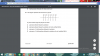
It says salt formation so the ratio of acid to calcium would be 2:1 for example for Butanedioic acid seperate into two parts and react it with calicum and it will look like this :View attachment 63791
I really can't figure this out. How can the formula be like that? Isn't it going to be 2 Ca ? The answer is C btw. Helppp

Thank youuuuuIt says salt formation so the ratio of acid to calcium would be 2:1 for example for Butanedioic acid seperate into two parts and react it with calicum and it will look like this :
CH2COO- + Ca2+ = (CH2COO)2 Ca
And do that for the rest and so its formula will become
C8H8O8Ca2
Divide by 2 and so the E.F becomes
C4H4O4Ca
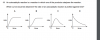
As the reactants react they produce auto catalyst with the products so the rate increases but later after some time the the rate will decrease due to low substrate concentration.why is it C and not B?
is shape of graph B for conc against time for auto-catalytic reaction?As the reactants react they produce auto catalyst with the products so the rate increases but later after some time the the rate will decrease due to low substrate concentration.

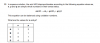
How to do this one?
PV/RT=n where n is moles of CO2 produced..with calculation u ll get n=16How to do this one?

ThanksPV/RT=n where n is moles of CO2 produced..with calculation u ll get n=16
since 2 moles of alkane are producing 16 moles of CO2,
alkane : C02
1 : 8
means alkane has 8 carbons in it


Help needed hereThe answer to this is C...although I know that there will be no dipole moment in CO2 but does that also mean that it will not have permanent dipole-dipole interactions?
The answer to this is C...although I know that there will be no dipole moment in CO2 but does that also mean that it will not have permanent dipole-dipole interactions?
please help me out with this one. the ans is C
View attachment 63816
View attachment 63817
can anyone pls explain me how to solve these two questions
But due to difference in electronegativities, it DOES have dipoles...so won't there b pd-pd forces due to the presence of dipoles, despite the fact that it has no dipole moment ?CO2 does not have pd-pd interaction as it has no overall dipole moment
🚀 NEW from the xtremepape.rs team: AI exam prep — 150,000+ worked solutions, and it marks your handwritten working from a photo. Sign in with your forum account & try it free → prepare.xtremepape.rs