
- Messages
- 681
- Reaction score
- 438
- Points
- 73
Yes i did. I got : 13sin(x+67.38)
13 sin(2x + 67.38) = 11
Now solve it
🚀 NEW from the xtremepape.rs team: AI exam prep — 150,000+ worked solutions, and it marks your handwritten working from a photo. Sign in with your forum account & try it free → prepare.xtremepape.rs
Yes i did. I got : 13sin(x+67.38)


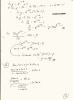
Because you can't integrate sin^2(theta)Can somebody explain Q5 ii) to me, please?
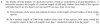
Why do we have to use 1-cos 2 theta/2? Why can't we just put the limits in the original 2sin^2theta to solve this?
http://papers.xtremepapers.com/CIE/Cambridge International A and AS Level/Mathematics (9709)/9709_w10_qp_32.pdf
THANK YOU SO MUCH! Yes I will!Here it says the rate of increase of the surface area of the sphere is proportional to its volume.
so dA/dt=kV
dA/dt=4pi r^2 differentiating this gives us 8pir dr/dt
now equate
8pirdr/dt=k(4/3pi r^3)
put values of dr/dt and r given in the question to get k=12/25
Now put this value of k back in 8pirdr/dt=k(4/3pi r^3) to get dr/dt=0.08r^2
Now apply differential equation solve it and you will get
-1/r=0.08t+k
put t=o and r=5 to get k=-1/5
Now solve it further to get in terms of r and t
your final equation will be r=5/(1-0.4t)
for the last part equate the denominator to 0 you will get t=2.5 which means that if denominator is 0 equation is not valid so values of t must be grater than 0 but less than 2.5.HOPE YOU GOT IT!! PLEASE PRAY FOR ME!!

In many questions it is multiplied by -1 to get the answer.For secondly
take its conjugate.
Ive read somwhereAs for your first doubt. There's no specific formula. Depends on the question..

Hello guys, I'm solving http://papers.xtremepapers.com/CIE/Cambridge International A and AS Level/Mathematics (9709)/9709_s12_qp_33.pdf and I had this beautifully posted solutions to all the paper, i', just wondering in Question 5 (ii) How did they get that formula? Why did they divide by 70 and multiply by 100? Thank you so much!!
View attachment 26637
Credit to Anika Raisa
May be, but always I learned to take it conjugate.In many questions it is multiplied by -1 to get the answer.
Since 1+√2i and 1-√2i are the two imaginary roots, which means x=1+√2i and x=1-√2i . Equate them, ( x - [1+√2i] ) ( x - [1-√2i] ) and expand them. Use the resulting equation ( x^2 -2x + 3 ) to do long division with P(x). You'll get a quadratic equation in return, then just use the usual way to find the roots. =)
In both cases? whether its sqroot of a number or complex root?May be, but always I learned to take it conjugate.


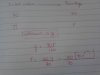
Is it something like this? Then i tend to infinity and obtain P = 100/eAfter I went through the question. The initial mass (t=0) of substance B, which is also y is 70. The question asks for percentage mass remaining. Since the mass remaining as t increase to infinite is 70/e, the percentage mass remaining should be (remaining/initial) x 100 , which is also [(70/e)/70]x100.
I hope you understand it. =)
When we have a complex root, to state the other complex root, we take its conjugate.In both cases? whether its sqroot of a number or complex root?
🚀 NEW from the xtremepape.rs team: AI exam prep — 150,000+ worked solutions, and it marks your handwritten working from a photo. Sign in with your forum account & try it free → prepare.xtremepape.rs