- Messages
- 1,318
- Reaction score
- 1,374
- Points
- 173
Can you please do it ... ms says separate variables and integrate to obtain ln(x+2) of one side... I'm not getting thatreplace sin^2(2theta) with (1-cos4theta)/2 and then solve.
🚀 NEW from the xtremepape.rs team: AI exam prep — 150,000+ worked solutions, and it marks your handwritten working from a photo. Sign in with your forum account & try it free → prepare.xtremepape.rs
Can you please do it ... ms says separate variables and integrate to obtain ln(x+2) of one side... I'm not getting thatreplace sin^2(2theta) with (1-cos4theta)/2 and then solve.

Oh thaT.Thats part iii where it asks to use iterative formula to find value of a
How to prove that it's converging to a ?

View attachment 58958
Parts ii and iii please
I guess you just need to rearrangeI cant recall any other method. Maybe ***amd*** can help.
ThereCan you please do it ... ms says separate variables and integrate to obtain ln(x+2) of one side... I'm not getting that


If your factorization is correct then you should get the correct answers. Take x as -1 then -3/4 and then -2View attachment 58988
Can anyone please solve to find values of A,B and C in these partial fractions ??
[A/(x+1)] + [B/(x+2)] + [C/(4x+3)] = the part ii shown above
So how to find A,B and C?? I can do it with 2 denominators... with the 3 I'm getting it wrong :/
w15-33
So do you take x=-1 on both sides and then solve like so: A(x+2)(4x+3) + B(x+1)(4x+3) + C(x+1)(x+2) so that B and C terms become 0 when x=-1 ??If your factorization is correct then you should get the correct answers. Take x as -1 then -3/4 and then -2
Yup. You will get A. Next value will give u B and third CSo do you take x=-1 on both sides and then solve like so: A(x+2)(4x+3) + B(x+1)(4x+3) + C(x+1)(x+2) so that B and C terms become 0 when x=-1 ??

(25 -x^2)^(1/2)Integrate : sqrt(25 - x^2)
lower bound 0 and uper bound is 5
Hey thanks, I tried the same thing, but not getting the answer.(25 -x^2)^(1/2)
((25 - x^2)^(1/2 + 1))/(1/2+1 * -2x)
-((25-x^2)^(3/2))/3x
put the limits in and calculate.

which paper?Can you please show me the steps for question (iii) ? View attachment 58996

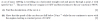

I haven't read the question in detail, but one thing you say has caught my attention.Can anyone tell me as to why the speed in part (iii) would not exceed 20? (The method used to calculate this 20 is assuming a=0............. which is when there is max speed.......... so how is it the least value?)
View attachment 59004
Thnx
Take both the roots you obtained in part (i), and cube it, if it evaluates to -1, that's proof that it satisfies the given equation in the question. Hope that makes sense.Can you please show me the steps for question (iii) ? View attachment 58996

Can anyone tell me as to why the speed in part (iii) would not exceed 20? (The method used to calculate this 20 is assuming a=0............. which is when there is max speed.......... so how is it the least value?)
View attachment 59004
Thnx
Ohhhhhh, Ohkayyyyyy!I haven't read the question in detail, but one thing you say has caught my attention.
Acceleration being zero doesn't mean maximum speed, it could mean either max OR minimum speed.
It's just like the derivative of a function. When it's zero, it represents a total maxima OR minima of the original function. To find out which one it is (Max or Min) you have to do the sign changing test or evaluate the Second Derivative and see it it's greater than or less than zero.
Hope that makes sense.
🚀 NEW from the xtremepape.rs team: AI exam prep — 150,000+ worked solutions, and it marks your handwritten working from a photo. Sign in with your forum account & try it free → prepare.xtremepape.rs