- Messages
- 41
- Reaction score
- 19
- Points
- 18
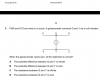
p.d. across P = p.d. across R38th question, I'm slightly confused. Can someone help?
So P/Q = R/S
🚀 NEW from the xtremepape.rs team: AI exam prep — 150,000+ worked solutions, and it marks your handwritten working from a photo. Sign in with your forum account & try it free → prepare.xtremepape.rs
p.d. across P = p.d. across R38th question, I'm slightly confused. Can someone help?
thank you!p.d. across P = p.d. across R
So P/Q = R/S



is it B?
Ais it B?
huh im confused too now..
Length of 1 turn is pi*D. Length of n turns is pi*D*N. Cross section area = pi*d^2/4.
Shouldn't the 2 resistances be added?Length of 1 turn is pi*D. Length of n turns is pi*D*N. Cross section area = pi*d^2/4.
no as the resistance is only from copper wire due to its length and areaShouldn't the 2 resistances be added?
 help
helpa = -F/m. s = 100. v = 0.
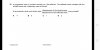
Waves are in phase. Which means that their path difference is 0. Which means that their displacement is same. So the answer is C.
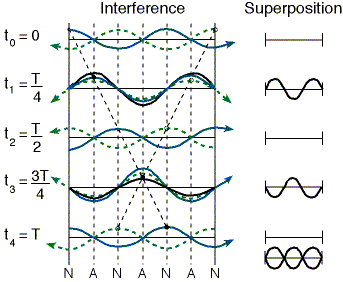
This diagram shows how the superposition of an incident and reflected wave results in a stationary wave.
What is this??2(x+5) + 1 = 7 + 2x. Please help.
2(x+5) + 1 = 7 + 2x. Please help.
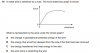
Because area under Force extension graph is always the work done in stretch the wire, given no plastic deformation has occurred. If plastic deformation occurs then the area under the graph beyond yield point, is the energy used to permanently deform the wire
🚀 NEW from the xtremepape.rs team: AI exam prep — 150,000+ worked solutions, and it marks your handwritten working from a photo. Sign in with your forum account & try it free → prepare.xtremepape.rs