- Messages
- 884
- Reaction score
- 449
- Points
- 73
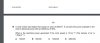
Why not B?
🚀 NEW from the xtremepape.rs team: AI exam prep — 150,000+ worked solutions, and it marks your handwritten working from a photo. Sign in with your forum account & try it free → prepare.xtremepape.rs

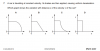
Bro it is a VELOCITY-DISTANCE graph not a velocity-time graph. If it were a velocity-time graph, it would be B since the velocity is constant initially and then there is a constant deceleration(gradient is constant in that graph). But that's not the case. The answer would be A, because the car is decelerating so as its speed decreases, the rate at which it covers a distance decreases rapidly. This is shown by A, since when the velocity is decreasing, the distance the car covers is small(compared to other graphs).

Are you einstein?Bro it is a VELOCITY-DISTANCE graph not a velocity-time graph. If it were a velocity-time graph, it would be B since the velocity is constant initially and then there is a constant deceleration(gradient is constant in that graph). But that's not the case. The answer would be A, because the car is decelerating so as its speed decreases, the rate at which it covers a distance decreases rapidly. This is shown by A, since when the velocity is decreasing, the distance the car covers is small(compared to other graphs).

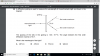
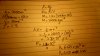
The angle between the central maxima and first order is 35(which is the theta in the equation dsin(theta)=n(lamda) )
The angle between the central maxima and first order is 35(which is the theta in the equation dsin(theta)=n(lamda) )
1x10^-6*sin35=1(lamda)
lamda=5.7x10^-7 which is 574nm(C)
If u don't mind, can u tell what were ur O level grades?The angle between the central maxima and first order is 35(which is the theta in the equation dsin(theta)=n(lamda) )
1x10^-6*sin35=1(lamda)
lamda=5.7x10^-7 which is 574nm(C)

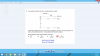
First apply the equation to the part with distance x and then to the whole descent...then solve the two equations simultaneously to eliminate xView attachment 64113
This pls
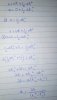
First apply the equation to the part with distance x and then to the whole descent...then solve the two equations simultaneously to eliminate x
View attachment 64115
I'm not a nerdNerds aren't that bad
Two simultaneous equations will be formed by s=ut +0.5at^2View attachment 64113
This pls
Firstly, the ball is released meaning it's initial velocity(u) is zero. Now, you form two equations, one for the motion of the ball from zero point to m1, then from zero point to m2. First equation:View attachment 64113
This pls
They're great but I don't like to show off.If u don't mind, can u tell what were ur O level grades?
How to solve this
Why is Angle 35?The angle between the central maxima and first order is 35(which is the theta in the equation dsin(theta)=n(lamda) )
1x10^-6*sin35=1(lamda)
lamda=5.7x10^-7 which is 574nm(C)
P=E/t, KE=1/2(m)(v^2), D=m/VHow to solve this

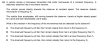
Because they gave the angle between the two first order maximum. The angle in the equation dsin(theta)=n(lamda) is the angle between the central maxima and the order, so to get this angle you divide 70 by 2 which is 35.Why is Angle 35?
That's good but I'm asking myself...that won't be showing offThey're great but I don't like to show off.
🚀 NEW from the xtremepape.rs team: AI exam prep — 150,000+ worked solutions, and it marks your handwritten working from a photo. Sign in with your forum account & try it free → prepare.xtremepape.rs