- Messages
- 3
- Reaction score
- 2
- Points
- 13
Can anyone post notes on kinematic
🚀 NEW from the xtremepape.rs team: AI exam prep — 150,000+ worked solutions, and it marks your handwritten working from a photo. Sign in with your forum account & try it free → prepare.xtremepape.rs


For question 14--------http://olevel.sourceforge.net/papers/9702/9702_s13_qp_12.pdf
Kindly help me for question 14, 16, 17 please
For question 14--------
(0.35*3*9.81)+(0.1*1.4*9.81=(0.15*6*9.81)+ans
ans=2.8Nm
For question 16----is answer b.
if yes then this is the way
80*28/100=112/5
112/5 =potential energy
112/5=mgh
112/5=(o.12)(9.81)h,,,,,,,,,,,,,,,,,only 120 g taken into account as only the arrow has a movement.
For question 17--------mgsinteta*speed=40% of total power mgsinteta=force,,,,,,force*velocity=power
(total m)(9.81)sin30)==40%
100%=ans
Hope it helps.Please tell if the answer u get by this way is differnt from mark scheme...
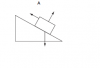
Hai,guys need help here.Why is this object said to be not in equilibrium?

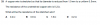
i already solved these questions10 A stationary nucleus has nucleon number A.
The nucleus decays by emitting a proton with speed v to form a new nucleus with speed u. The
new nucleus and the proton move away from one another in opposite directions.
Which equation gives v in terms of A and u?
A v = (A/4 - 1)u
B v = (A – 1)u
C v = Au
D v = (A + 1)u
The answer is B, can anybody please explain this to me ??!!

10 A stationary nucleus has nucleon number A.
The nucleus decays by emitting a proton with speed v to form a new nucleus with speed u. The
new nucleus and the proton move away from one another in opposite directions.
Which equation gives v in terms of A and u?
A v = (A/4 - 1)u
B v = (A – 1)u
C v = Au
D v = (A + 1)u
The answer is B, can anybody please explain this to me ??!!

Hai,guys need help here.Why is this object said to be not in equilibrium?
I think this is the way.Not sure.Help please QAQ
http://olevel.sourceforge.net/papers/9702/9702_s13_qp_12.pdf
Someone please help me for no. 20
Jessie N.
Thanks a lot buddy,really understand..The forces don't pass through a same point so not in equilibrium.
Remember that forces passed through a same point are not necessarily equilibrium, but the forces in equilibrium must pass through a same point ^_^
I think this is the way.Not sure.
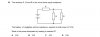
p=v^2/r
total r=1/r +1/r+1/r
r=r/3
as is parallel,,,the voltage is same======>p=v^2/r
12=v^2/(r/3)
v^2/r=p
v^2/r=12/3
=4
If the answer is rite,then this wrking should be rite,i guess.
Oh,i am sorry.I will try again now.Ans
Answer is 2V :/
🚀 NEW from the xtremepape.rs team: AI exam prep — 150,000+ worked solutions, and it marks your handwritten working from a photo. Sign in with your forum account & try it free → prepare.xtremepape.rs