- Messages
- 17
- Reaction score
- 1
- Points
- 3
Can anyone explain why it is not appropriate to use the Young Modulus to determine the extension when the braking force is applied? Thank You.
🚀 NEW from the xtremepape.rs team: AI exam prep — 150,000+ worked solutions, and it marks your handwritten working from a photo. Sign in with your forum account & try it free → prepare.xtremepape.rs
Because the density of the air varies. As you go up the mountain, the air gets thinner meaning the no. of air molecules decreases. For pressure, the air molecules collide with one another as well as with the wall of the container. When they collide they experience a change in momentum which in turns produces a force. Pressure is given by the average of this combine collective forces. Hence, the lower the no. of molecules the lower the pressure.Explain, in terms of the air molecules, why the pressure at the top of a mountain is less
than at sea level ?
Weight - F=maView attachment 53300 can somebody explain how is the answer for C : 7.4?
Because at the breaking force, the extension is no longer proportional to the force applied, that is hooke's law is no longer obeyed.Can anyone explain why it is not appropriate to use the Young Modulus to determine the extension when the braking force is applied? Thank You.



Because at the breaking force, the extension is no longer proportional to the force applied, that is hooke's law is no longer obeyed.


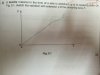
Whenever I do a vector question, I stuck on it. Latest one is from Nov 2014. It will be nice if someone can draw the diagrams of Q`1 c i, ii. Thanks.

Young modulus is the gradient for the graph of stress against strain. Normally, when we measure the Young Modulus we take it from the proportional limit, that is the straight line part of the graph. This straight line part denotes the max load for which hooke's law is obeyed and is also the place where elastic deformation occurs. I hope that answers your question! Maybe you should look at the graph for ductile materials for a better understanding.Thank your for the solution. How's Hooke law is related to Young Modulus? Thank You.

Pressure = force / area = mass * acceleration / (volume / height) = (mass / volume) * acceleration * height = density * gravity * heightCan someone plz help me to derive pressure=density*gravity*height !!!

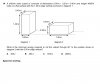 Can anyone help ???
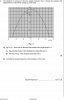

🚀 NEW from the xtremepape.rs team: AI exam prep — 150,000+ worked solutions, and it marks your handwritten working from a photo. Sign in with your forum account & try it free → prepare.xtremepape.rs