Chapter, evolution please.hi....im attachin notes for A2 energy and Respiration......msg me if u need notes on other chapters...........hope youll find them helpful.
P.S. good notes, JazakaAllah khairan.
🚀 NEW from the xtremepape.rs team: AI exam prep — 150,000+ worked solutions, and it marks your handwritten working from a photo. Sign in with your forum account & try it free → prepare.xtremepape.rs
Chapter, evolution please.hi....im attachin notes for A2 energy and Respiration......msg me if u need notes on other chapters...........hope youll find them helpful.
thank you!!I deleted my other post, because i think i did it wrong. Look at the reaction from the one top to the one below....this is the fragmentation occurring.
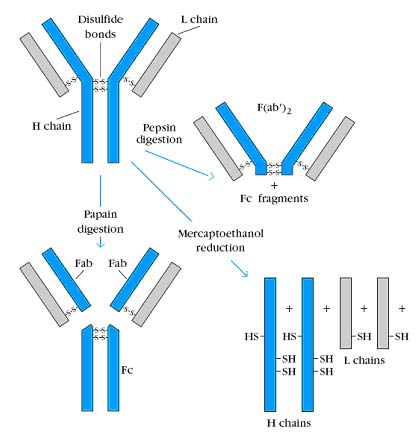
Well see, the thing is we study a very simplified way of antibody, a little more accurate is image below, notice where is hinge region, doesnt seem to be a polypeptide, but i dont know what is hinge region made of actually.thank you!!
when I saw the question I thought it meant break the disulfide bonds in the hinge region ORZ...So the hydrolysis is occurring at the polypeptide chains but not at the bonds, right?

thank you anyway >w<Well see, the thing is we study a very simplified way of antibody, a little more accurate is image below, notice where is hinge region, doesnt seem to be a polypeptide, but i dont know what is hinge region made of actually.

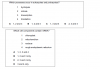
well, I think the answer is C and A, am I correct?

From the picture here i guess the hinge region is made up of polypeptide coz you can see the disulfide bridges here. this is what i think.Well see, the thing is we study a very simplified way of antibody, a little more accurate is image below, notice where is hinge region, doesnt seem to be a polypeptide, but i dont know what is hinge region made of actually.
So we can say that the fragmentation process depends on which hydrolytic enzyme the antibody is exposed to right?I deleted my other post, because i think i did it wrong. Look at the reaction from the one top to the one below....this is the fragmentation occurring.
In my view its B and B
Eukaryotic cells have nucleus, not prokaryotes, careful. (1st quest)well, here's my opinion..
since the eukaryotic cells do not have nucleus so mitosis cannot occur..
and the second question..I've seen that question before but I forgot from which paper it is in.. RER has ribosomes so mRNA can also be found there

Eukaryotic cells have nucleus, not prokaryotes, careful. (1st quest)
Yeah true i forgot that *facepalm* you're right. (2nd quest)
i'll delete my post for no confusion.
Yeah so the answer is C and A
I understand. it happened to me several times, esp in maths. its okay, u're welcum sis.for god's sake I always mix up those 2 words .... I swear the thing in my mind is prokaryote... Thanks for pointing out this stupid mistake...

Its C & Awell, here's my opinion..
since the eukaryotic cells do not have nucleus so mitosis cannot occur..
and the second question..I've seen that question before but I forgot from which paper it is in.. RER has ribosomes so mRNA can also be found there

Here u are.Could anyone please help me with question 1b? http://papers.xtremepapers.com/CIE/Cambridge International A and AS Level/Biology (9700)/9700_s06_qp_5.pdf
thank youu
Guys I need HELP!! Im taking Biology A level in june! Now any tips how to learn all this? plus about the pastpapers! specially paper 4 has a lot to learnnnn!! Guys help tell me what should I do?
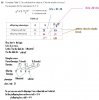
Here u are:Oct/ Nov P 53 Q 2 (b)(2) .......How to find the expected (E) values here ????......I found the first one by ..... ( 21+32+19+40) /4
giving me 28 as (E) for with tails ....but i don't know Why ....so concept plsss.....and also 2nd one ....???...
(*_-)..........
http://papers.xtremepapers.com/CIE/Cambridge International A and AS Level/Biology (9700)/9700_w11_qp_53.pdf
🚀 NEW from the xtremepape.rs team: AI exam prep — 150,000+ worked solutions, and it marks your handwritten working from a photo. Sign in with your forum account & try it free → prepare.xtremepape.rs