http://papers.xtremepapers.com/CIE/Cambridge International A and AS Level/Chemistry (9701)/9701_s13_qp_42.pdf
Anyone generous to help
Q2 part b
-
Prepare by Xtremepapers!
🚀 NEW from the xtremepape.rs team: AI exam prep — 150,000+ worked solutions, and it marks your handwritten working from a photo. Sign in with your forum account & try it free → prepare.xtremepape.rs
You are using an out of date browser. It may not display this or other websites correctly.
You should upgrade or use an alternative browser.
You should upgrade or use an alternative browser.
Chemistry: Post your doubts here!
- Thread starter XPFMember
- Start date
Ok....for cathode the two candidates are Mg2+ and H+ and according to E values ...H+ has more tendency to get reduced ....and for anode....at anode,oxidation occurs...so,the candidates are OH- and Br-....now, for cathode, if E values is positive, than that elements will get reduced.....and for anode, those elements having negative E vales will get oxidised.........Can you elaborate the point ? or compare it with the other two ? For cathode > more positive E vlaue will go to cathode and no doubt in that ..
What about anode?

- Messages
- 222
- Reaction score
- 166
- Points
- 53
- Messages
- 222
- Reaction score
- 166
- Points
- 53
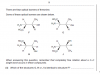
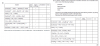
Hei guys.Can anyone help me with this terribly hard question from may june 13 paper.Thank u.
My doubts r the last 3 reaction.
a)how can the 6th rxn be a ligand exchange
b)how can the last rxn show a ligand exchange n no acid base.Isnt there suppose to be acid base when got prescence of water as product.Thanks a lot.....
My doubts r the last 3 reaction.
a)how can the 6th rxn be a ligand exchange
b)how can the last rxn show a ligand exchange n no acid base.Isnt there suppose to be acid base when got prescence of water as product.Thanks a lot.....
Attachments
02+2H2O+4e=4OH- E value is +0.40VOk....for cathode the two candidates are Mg2+ and H+ and according to E values ...H+ has more tendency to get reduced ....and for anode....at anode,oxidation occurs...so,the candidates are OH- and Br-....now, for cathode, if E values is positive, than that elements will get reduced.....and for anode, those elements having negative E vales will get oxidised.........
Br2+2e=2Br E value is + 1.07V
OH has lower ( more negative ) Evalue , so it will be at anode ???????
My friend you said it , " less positive have more tendency to get oxidised... "OH- oxidises to give O2........you must be knowing that metals goes to cathode and non metal to anode......and at anode, oxidation takes place....and according to our E values, less positive have more tendency to get oxidised...
So its oxygen which will be at anode ( less positive E value ) NOT Br ..


- Messages
- 271
- Reaction score
- 429
- Points
- 73
Thanks a lot!what if there is a methyl group at position 1 and OH at position 4 in benzene ring what will I use for nitration?in 4e u can join the amino acids in any order but there should be 3 amino acids present and 2 peptide bonds present
hmmm we use only dilute HNO3 when theres reaction with a phenol and H2SO4 and HNO3 when theres benzene or whtever got it?
Reminder for the alpha helix structure( plz a simpler one)
Thanks
- Messages
- 271
- Reaction score
- 429
- Points
- 73
Sitoon can u plz help me with May June 2006 paper4 q4 diii.thanks aloot!

- Messages
- 354
- Reaction score
- 529
- Points
- 103
please some one help me http://papers.xtremepapers.com/CIE/...d AS Level/Chemistry (9701)/9701_s06_qp_1.pdf
Q23 , Q20 , Q15 , Q17 , Q11 , Q5 , Q6 , Q3 ... answer as much as you can .. so that I don't disturb you and inbox me if required thanks ^_^
Q23 , Q20 , Q15 , Q17 , Q11 , Q5 , Q6 , Q3 ... answer as much as you can .. so that I don't disturb you and inbox me if required thanks ^_^
- Messages
- 271
- Reaction score
- 429
- Points
- 73
Thanks! Yeah it is simple (a bit)the first one is complicated but the second one has to be drawn in the exam n its quite simple i belief wht do u think?
Thanks again!
Ahhhh...what did i do up there......sorry....i,myself got pretty confused ....let me think....My friend you said it , " less positive have more tendency to get oxidised... "
So its oxygen which will be at anode ( less positive E value ) NOT Br ..
- Messages
- 354
- Reaction score
- 529
- Points
- 103

Please Help me !!!
- Messages
- 354
- Reaction score
- 529
- Points
- 103

Help me please !

- Messages
- 253
- Reaction score
- 1,195
- Points
- 153
cudnt expect to be any more simpler afterall we r doing A2 not KG2Thanks! Yeah it is simple (a bit)
Thanks again!
- Messages
- 253
- Reaction score
- 1,195
- Points
- 153
no matter wht else is present as far as ik if OH is present then for nitration u use dilute HNO3Thanks a lot!what if there is a methyl group at position 1 and OH at position 4 in benzene ring what will I use for nitration?
Reminder for the alpha helix structure( plz a simpler one)
Thanks
yh i posted tht n u saw it also
Hydrogen bond is between hydrogen and highly electronegative ion ( N , O , F ) .. so B only has this H --- N in ammonia
Please Help me !!!
Its , Cl2 + KI ---> KCl + I2
Help me please !
Oxidation state of element is zero .. and in KI oxidation state of iodine is -1 ... therefore it changes from -1 to 0 ( increase in oxidation state ) which is oxidation
- Messages
- 354
- Reaction score
- 529
- Points
- 103
ThanksIts , Cl2 + KI ---> KCl + I2
Oxidation state of element is zero .. and in KI oxidation state of iodine is -1 ... therefore it changes from -1 to 0 ( increase in oxidation state ) which is oxidation
and If you don't matter can you explain this one too ! 
My friend, i tried doing it using the E values......but, i did not match with what we have actually studied...but on our coursebook, an list of increasing ease of oxidation of elements are given...see that...it will help youMy friend you said it , " less positive have more tendency to get oxidised... "
So its oxygen which will be at anode ( less positive E value ) NOT Br ..