-
Prepare by Xtremepapers!
🚀 NEW from the xtremepape.rs team: AI exam prep — 150,000+ worked solutions, and it marks your handwritten working from a photo. Sign in with your forum account & try it free → prepare.xtremepape.rs
You are using an out of date browser. It may not display this or other websites correctly.
You should upgrade or use an alternative browser.
You should upgrade or use an alternative browser.
Chemistry: Post your doubts here!
- Thread starter XPFMember
- Start date

- Messages
- 176
- Reaction score
- 186
- Points
- 53
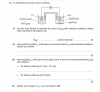
(ii) At standard conditions the concentration should be 1mol/dm3, in this case the Ag+ concentration as given in the beginning of the question is 2.5×10⁻² mol/dm3, which is lower than 1.View attachment 62130
Please explain!!thanks. All parts after E*cell
Ag+ + e- ==> Ag has an E*cell of 0.8 v the backward reaction means less reduction more oxidation and therefore less Ecell value. The decrease in this, causes and overall decrease as Ag is the positive electrode (E*cell=positive electrode-negative electrode)
The Ag+ concentration decreases in the solution, favouring the backward reaction (Le Chatelier's principle) The backward reaction means less reduction more oxidation and therefore less Ecell value. The decrease in this, causes and overall decrease as Ag is the positive electrode
(iii) In Fe3+(aq) + Fe2+(aq) no change will take place, because its just gonna increase the sulphate ions in the solution which has zero effect.
While in Ag2SO4(aq) it will decrease the Ecell, thats because the sulphate ions precipitate the the Ag+ forming Ag2SO4, therefore it decreases the Ag+ concentration favouring the backward reaction, as explained above ^^
(iv) Basically what I said in (iii)
Last edited:

- Messages
- 122
- Reaction score
- 17
- Points
- 28
9701_w09_qp_42
qtn 5(a)
can someone plzz explain me this part?
qtn 5(a)
can someone plzz explain me this part?
- Messages
- 122
- Reaction score
- 17
- Points
- 28
can some plzz explain?
9701_w16_qp_41
- Messages
- 176
- Reaction score
- 186
- Points
- 53
9701_w09_qp_42
qtn 5(a)
can someone plzz explain me this part?
Here in this question, it isn’t based on what we studied throughout the year’s course, its more like enough information is given in the question, and based on this you have to make your answers. In the question there are 2 principals we got to know about.
1st is that a delocalised benzene is coplanar, while any other cycloalkane isn’t.
2nd is that a simple chain with no methyl branches is coplanar while a methyl branched one isn’t.
So far nothing we have learned all from the question and you just have to conclude.
For the structures given we have to apply the knowledge we gained.
In A its all benzene rings, so its coplanar (1st principal)
In B there is a cycloalkane attached which makes it not all carbons coplanar. (1st)
In C this is somehow complicated but it is coplanar, thats because both of the side chains attached to the O has no branches and are straight chains making them coplanar (2nd)
In D its just a simple chain without methyl branches so all coplanar (2nd)
And in E Its a benzene ring attached to a non-methylbranched chain, which makes it coplanar. (1st & 2nd)
Get it?
- Messages
- 176
- Reaction score
- 186
- Points
- 53
- Messages
- 132
- Reaction score
- 46
- Points
- 38
99/130 in AS in MJ 2016 (A threshold was 81). How much more approximately do I need for an A* in A2?

- Messages
- 187
- Reaction score
- 976
- Points
- 103

can some plzz explain?
9701_w16_qp_41
I think it's because Vanadium exists in multiple oxidation states +2, +3, +4 and +5 .. The V3+ ions are further oxidized by iron to V+4 (i.e. VO2+), therefore the equation is a bit different from one we are expecting
- Messages
- 176
- Reaction score
- 186
- Points
- 53
90-100/13099/130 in AS in MJ 2016 (A threshold was 81). How much more approximately do I need for an A* in A2?
Depends on the 2017's gt

- Messages
- 1,394
- Reaction score
- 12,123
- Points
- 523
The same explanation as techgeek 's. In the question we are given that Fe3+ is in EXCESS. So the V3+ are futher oxidised to V4+ (VO2+) by Fe3+I think it's because Vanadium exists in multiple oxidation states +2, +3, +4 and +5 .. The V3+ ions are further oxidized by iron to V+4 (i.e. VO2+), therefore the equation is a bit different from one we are expecting
- Messages
- 176
- Reaction score
- 186
- Points
- 53
I think it's because Vanadium exists in multiple oxidation states +2, +3, +4 and +5 .. The V3+ ions are further oxidized by iron to V+4 (i.e. VO2+), therefore the equation is a bit different from one we are expecting
Oww okay guysThe same explanation as techgeek 's. In the question we are given that Fe3+ is in EXCESS. So the V3+ are further oxidised to V4+ (VO2+) by Fe3+
Thanks!! I never read the excess part though
- Messages
- 122
- Reaction score
- 17
- Points
- 28
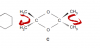
yeah understood all except for C.....is the chain considered this wayHere in this question, it isn’t based on what we studied throughout the year’s course, its more like enough information is given in the question, and based on this you have to make your answers. In the question there are 2 principals we got to know about.
1st is that a delocalised benzene is coplanar, while any other cycloalkane isn’t.
2nd is that a simple chain with no methyl branches is coplanar while a methyl branched one isn’t.
So far nothing we have learned all from the question and you just have to conclude.
For the structures given we have to apply the knowledge we gained.
In A its all benzene rings, so its coplanar (1st principal)
In B there is a cycloalkane attached which makes it not all carbons coplanar. (1st)
In C this is somehow complicated but it is coplanar, thats because both of the side chains attached to the O has no branches and are straight chains making them coplanar (2nd)
In D its just a simple chain without methyl branches so all coplanar (2nd)
And in E Its a benzene ring attached to a non-methylbranched chain, which makes it coplanar. (1st & 2nd)
Get it?
- Messages
- 122
- Reaction score
- 17
- Points
- 28
can u plzz write and the individual equation from which which we will get that final equation?The same explanation as techgeek 's. In the question we are given that Fe3+ is in EXCESS. So the V3+ are futher oxidised to V4+ (VO2+) by Fe3+
- Messages
- 176
- Reaction score
- 186
- Points
- 53
Yess!!yeah understood all except for C.....is the chain considered this way
View attachment 62132
- Messages
- 1,394
- Reaction score
- 12,123
- Points
- 523
You need to considercan u plzz write and the individual equation from which which we will get that final equation?
Fe3+ + e --> Fe2+ E= +0.77
V2+ + 2e --> V
2Fe2+ + V --> 2Fe2+ + V2+
Fe3+ + e --> Fe2+
V3+ + e --> V2+
Fe3+ + V2+ --> V3+ + Fe2+
Fe3+ + e --> Fe2+
VO2+ + 2H+ + e --> V3+ + H2O
Fe3+ + V3+ +H2O --> 2H+ + VO2+ + Fe2+
Now you can see that for the conversion of V to VO2+, you need 4Fe3+ which yield 4Fe2+. Combining the equations, you get this:
4Fe3+ + V3+ H2O --> 2H+ VO2+ + 4Fe2+
Thanks!!!(ii) At standard conditions the concentration should be 1mol/dm3, in this case the Ag+ concentration as given in the beginning of the question is 2.5×10⁻² mol/dm3, which is lower than 1.
Ag+ + e- ==> Ag has an E*cell of 0.8 v the backward reaction means less reduction more oxidation and therefore less Ecell value. The decrease in this, causes and overall decrease as Ag is the positive electrode (E*cell=positive electrode-negative electrode)
The Ag+ concentration decreases in the solution, favouring the backward reaction (Le Chatelier's principle) The backward reaction means less reduction more oxidation and therefore less Ecell value. The decrease in this, causes and overall decrease as Ag is the positive electrode
(iii) In Fe3+(aq) + Fe2+(aq) no change will take place, because its just gonna increase the sulphate ions in the solution which has zero effect.
While in Ag2SO4(aq) it will decrease the Ecell, thats because the sulphate ions precipitate the the Ag+ forming Ag2SO4, therefore it decreases the Ag+ concentration favouring the backward reaction, as explained above ^^
(iv) Basically what I said in (iii)
- Messages
- 132
- Reaction score
- 46
- Points
- 38
View attachment 62129
Help me understand this Please!!
ms
anode, O2,O2,Br2
cathode, Ag,H2, H2
Thanks!
For this question at anode, won't it be OH- that gets oxidized? Why H2O?
- Messages
- 176
- Reaction score
- 186
- Points
- 53
Both are correct!For this question at anode, won't it be OH- that gets oxidized? Why H2O?
If you put in the OH- formula, it will be -0.4 v which is still more positive and is favoured. Both equations produce O2 gas.