- Messages
- 92
- Reaction score
- 7
- Points
- 18
:%)  :%)
:%)
:%) 🚀 NEW from the xtremepape.rs team: AI exam prep — 150,000+ worked solutions, and it marks your handwritten working from a photo. Sign in with your forum account & try it free → prepare.xtremepape.rs
:%) THATS THE THING , the answer is AArshiful said:Hateexams93 said:WHHY ITS A???how is I1 >I2 ?
Imagine
pipes and water
when the diameter of the pipes are small the ease of flow of water is less
whereas when the diameter of the pipes are bigger the ease of flow of water is much more
so when the value of resistor is high it means that the flow of current is reduced
and when value of resistor is small more current can flow
so, current through 3 ohm resistor is less than 2 ohm
I1<I2
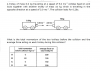
now find the combined resistance of 3and6 ohm and 2and2 ohm resistors individually
comb resistance of 3and6=(3*6)/(3+6)=2-------------------(1)
comb resistance of 2and2=(2*2)/(2+2)=1-------------------(2)
as we know PD is proportional to R(1)>R(2)
so V1>V2 therefore answer C
the answer is A -.-kakarocks said:Hateexams93 said:WHHY ITS A???how is I1 >I2 ?
IT's C as the others said . Current is divided equally in the Second one . And as you know Greater Resistance = Greater p.d
http://www.xtremepapers.me/CIE/Internat ... 4_ms_1.pdfkakarocks said:It can't be , MS please!
A is correct .. the total current in loop 1 is equal to the total current in loop 2. the ratio of resistances in loop 1 is 1:2 so more current will be dissipated in the 3 ohms resistor in THIS loop as it is the best route which is 2/3 of the total current ( as I is inversely proportional to R ) . in the second loop, the ratio of resistances is 1:1 so either ways, 1/2 of the total current will be passing through the 2 ohms resistor which makes itHateexams93 said:the answer is A -.-kakarocks said:Hateexams93 said:WHHY ITS A???how is I1 >I2 ?
IT's C as the others said . Current is divided equally in the Second one . And as you know Greater Resistance = Greater p.d

Hateexams93 said:THATS THE THING , the answer is AArshiful said:Hateexams93 said:WHHY ITS A???how is I1 >I2 ?
Imagine
pipes and water
when the diameter of the pipes are small the ease of flow of water is less
whereas when the diameter of the pipes are bigger the ease of flow of water is much more
so when the value of resistor is high it means that the flow of current is reduced
and when value of resistor is small more current can flow
so, current through 3 ohm resistor is less than 2 ohm
I1<I2
now find the combined resistance of 3and6 ohm and 2and2 ohm resistors individually
comb resistance of 3and6=(3*6)/(3+6)=2-------------------(1)
comb resistance of 2and2=(2*2)/(2+2)=1-------------------(2)
as we know PD is proportional to R(1)>R(2)
so V1>V2 therefore answer C
BOctahedral said::%)
BUT ITS wrong....the answer is A I1>I2Arshiful said:In my explanation I said I1<I2 and V1>V2 so C
check my answer for ur question in the above postsHateexams93 said:BUT ITS wrong....the answer is A I1>I2Arshiful said:In my explanation I said I1<I2 and V1>V2 so C
YAYYYYYaa thank u , i got it nowxHazeMx said:A is correct .. the total current in loop 1 is equal to the total current in loop 2. the ratio of resistances in loop 1 is 1:2 so more current will be dissipated in the 3 ohms resistor in THIS loop as it is the best route which is 2/3 of the total current ( as I is inversely proportional to R ) . in the second loop, the ratio of resistances is 1:1 so either ways, 1/2 of the total current will be passing through the 2 ohms resistor which makes it
2/3 > 1/2
I1 > I2
you welcomeHateexams93 said:YAYYYYYaa thank u , i got it nowxHazeMx said:A is correct .. the total current in loop 1 is equal to the total current in loop 2. the ratio of resistances in loop 1 is 1:2 so more current will be dissipated in the 3 ohms resistor in THIS loop as it is the best route which is 2/3 of the total current ( as I is inversely proportional to R ) . in the second loop, the ratio of resistances is 1:1 so either ways, 1/2 of the total current will be passing through the 2 ohms resistor which makes it
2/3 > 1/2
I1 > I2
its C...COS a doesnt shows reflected and incident wavegirlscampisra said:A is the answer for this hassam .. antinodes are formed at the open end!
:Yahoo!: and the second is D ??hassam said:its C...COS a doesnt shows reflected and incident wavegirlscampisra said:A is the answer for this hassam .. antinodes are formed at the open end!
xHazeMx said:you welcomeHateexams93 said:YAYYYYYaa thank u , i got it nowxHazeMx said:A is correct .. the total current in loop 1 is equal to the total current in loop 2. the ratio of resistances in loop 1 is 1:2 so more current will be dissipated in the 3 ohms resistor in THIS loop as it is the best route which is 2/3 of the total current ( as I is inversely proportional to R ) . in the second loop, the ratio of resistances is 1:1 so either ways, 1/2 of the total current will be passing through the 2 ohms resistor which makes it
2/3 > 1/2
I1 > I2
you welcome tooArshiful said:Thanks I got it too....

confirm it first, if it's right. i will post my workings. is it D ?Arshiful said:Summer 04 #9 pls some one explain this ques to me in details......
🚀 NEW from the xtremepape.rs team: AI exam prep — 150,000+ worked solutions, and it marks your handwritten working from a photo. Sign in with your forum account & try it free → prepare.xtremepape.rs